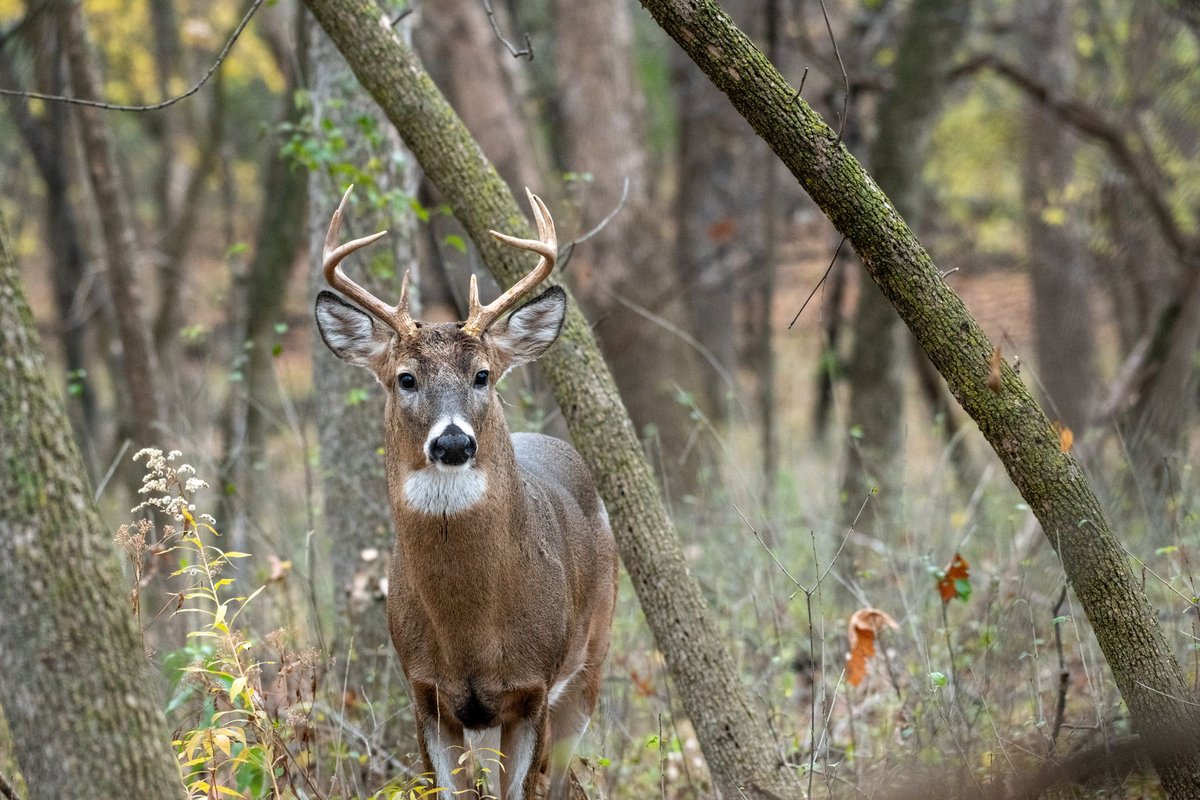
A white-tailed buck in an autumn forest. Photo by Andrew Patrick Photo via Pexels.
New York hunters start the 2026 seasons with one Antlered Deer Tag. A second one now has to be earned. Take an antlerless deer on a valid antlerless tag, report it, and the state issues another buck tag. The rule is part of a package meant to raise the doe harvest, and the report is what triggers it.
Why the state is targeting does
In its October 7 season announcement, DEC said deer populations in many areas have grown to levels that harm deer, habitat, the hunting experience and the public. It called antlerless deer, mostly does, the primary driver of population growth. The 2026 rules are built to push more hunters to take them.
How the second tag is earned
Every hunter gets a first Antlered Deer Tag with a hunting license. It is good in any season the hunter holds privileges for, except the September antlerless season. According to DEC’s deer and bear regulations, a hunter who harvests and reports an antlerless deer on any valid antlerless tag becomes eligible for a second one. That includes a Deer Management Permit, a Bow/Muzzleloader Antlerless Deer Tag or a Deer Management Assistance Program tag. Both buck tags can be used in the same season.
Hunters who buy bowhunting and muzzleloading privileges get a Bow/Muzzleloader Antlerless Deer Tag with each privilege, so most of them already carry a way to qualify.
The report is what counts
DEC adds the second tag to the hunter’s licensing account automatically and emails it if an address is on file. E-tag users see it in the HuntFishNY app. Paper tag users must print it and have it in hand before hunting for a second antlered deer. It can be printed free from the email or the online account, or for a $10 fee at a license agent.
Reporting deadlines were tightened last year and still apply. Under DEC’s harvest reporting rules, e-tag users must report immediately through the app. Paper tag users have 48 hours, no longer seven days. DEC treats an unreported deer as illegally taken.
Keep proof for a week
DEC may ask a hunter who received a second buck tag to prove the antlerless deer was antlerless. A digital photo or the head or skull qualifies, and it must be kept for seven days after the harvest. If the deer went to a processor without a photo, the hunter must give DEC the processor’s information on request.
Unlimited permits in 23 units
The rules also expanded unlimited Deer Management Permits to 23 Wildlife Management Units: 1C, 3M, 3P, 3R, 3S, 4J, 6P, 7F, 7H, 7J, 7R, 8A, 8C, 8F, 8G, 8H, 8J, 8N, 8R, 8S, 9A, 9F and 9G. Anyone who applies for a permit in those units gets one, at any point in the season. Each reported antlerless deer brings a replacement Bonus permit.
Elsewhere, hunters can now apply for up to four permits: two in units where permits are limited and two in unlimited units, according to DEC’s summary of recent rule changes.
Transfers must be on paper
There is no longer a cap on how many permits can be transferred between hunters, but transferred permits must be paper tags. E-tags are not available for them. A hunter who reports an antlerless deer on a transferred permit still receives the Bonus permits or second buck tag the system generates. The tagging basics still apply, as covered in party hunting and tagging.
Hunters who also hunt out of state should note that New York restricts what they can bring home. Only deboned meat and certain cleaned or finished parts of deer and other susceptible species may be imported, and they must be labeled. We covered how those rules work across states in CWD carcass transport rules.
Where the seasons stand
In the Northern Zone, the early muzzleloading season runs October 17 through 23, and the regular firearms season runs October 24 through December 6. Across most of the Southern Zone, early bowhunting opened October 1 and runs through November 20. The regular season there begins on the third Saturday in November. Firearm deer and bear hunters, and anyone with them, must wear fluorescent orange or pink, a rule compared state by state in our blaze orange explainer.
Sources
- New York State DEC, DEC Announces 2026 Big Game Hunting Seasons in October
- New York State DEC, Deer and Bear Hunting Regulations
- New York State DEC, Recent Changes to Hunting Regulations
- New York State DEC, Game Harvest Reporting
This article was researched and drafted with the assistance of AI tools and reviewed, fact-checked and edited by Leonidas Clark before publication. It is general information, not legal advice. Rules vary by state and unit and change; confirm with the relevant wildlife agency before you hunt.