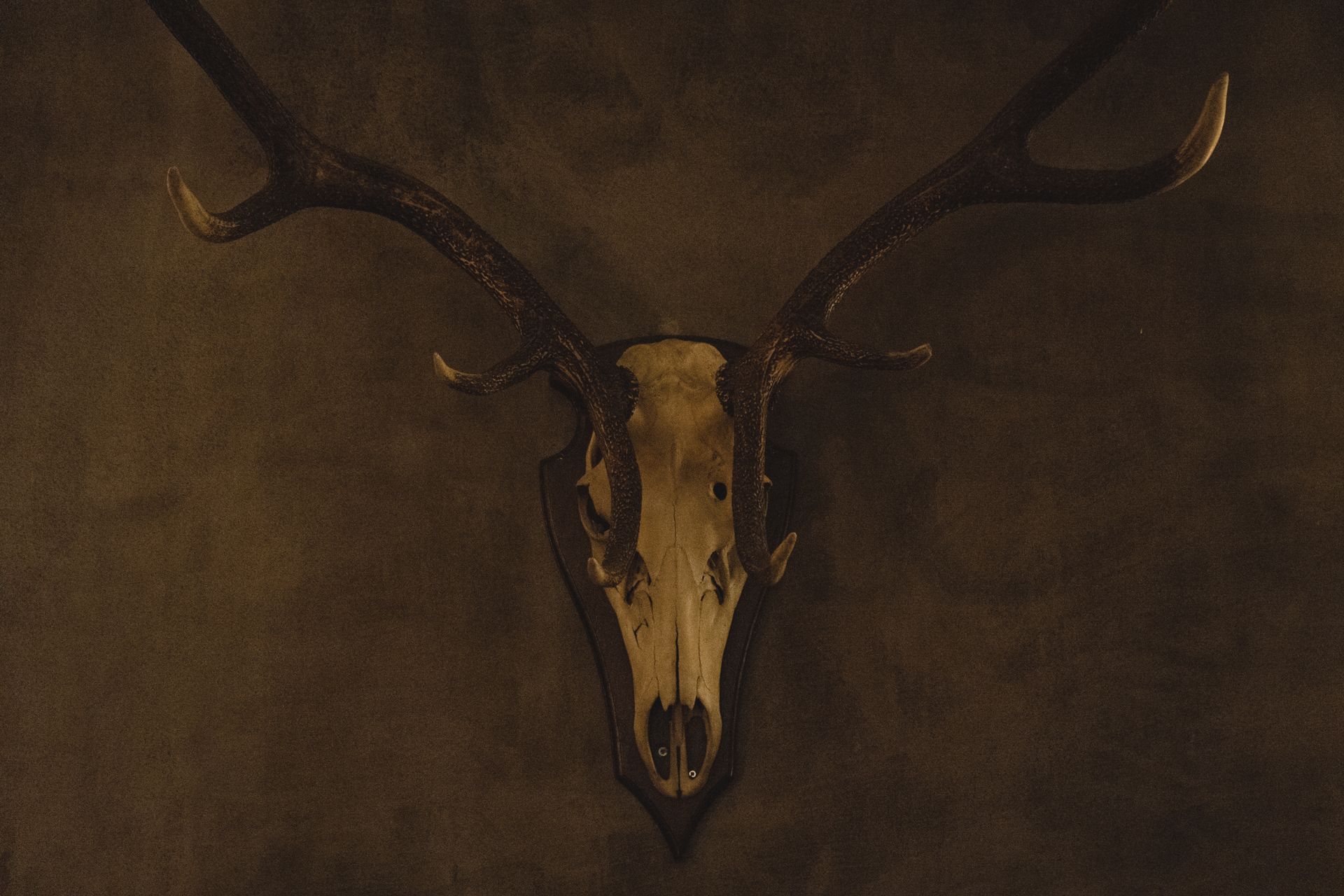
An antlered skull mounted on a wall. Photo by Faruk Tokluoğlu via Pexels.
A hunter who drives home with a whole deer in the truck bed may be legal where the deer was shot and illegal at the state line. Carcass transport rules exist because of chronic wasting disease, and they differ from one state to the next, and sometimes between zones within a state.
Why the carcass is the problem
CWD is caused by prions, misfolded proteins that the CDC says spread between animals through body fluids, directly or through contaminated soil, food or water. The CWD Alliance’s summary of carcass rules notes that the infectious agent is concentrated in the brain, spinal cord and lymph glands, so the most common rule is a ban on bringing in whole carcasses from CWD areas.
The disease is now widespread. As of June 2026, the USGS National Wildlife Health Center lists CWD in 37 states and five Canadian provinces, in wild cervids, captive herds or both.
The parts that usually travel
States with carcass rules generally allow a similar list of low-risk parts, according to the CWD Alliance:
- Meat that is cut and wrapped, or boned out
- Quarters or other portions with no part of the spine or head attached
- Hides with no head attached
- Clean skull plates with antlers, and antlers with no tissue attached
- Upper canine teeth
- Finished taxidermy
The common thread is that brain and spinal tissue stay behind.
Some states ban whole carcasses from anywhere
Minnesota prohibits importing whole deer, elk, moose and caribou carcasses from every state and province, whatever their CWD status. Heads from outside the state may come in only if they are delivered to a licensed taxidermist within 48 hours of entering Minnesota.
Tennessee similarly allows only approved parts from a deer, elk or moose killed in any other state.
Zones inside a state have rules too
Tennessee lets hunters move carcasses freely within its CWD Management Zone, but once a carcass enters the zone it cannot leave it. Only approved parts move statewide. Virginia applies a similar list of approved parts to deer leaving its DMA3 and DMA4 management areas.
Wyoming’s rules take another approach. A whole carcass can go to a camp, home, processor, taxidermist or sampling site within the state, as long as the head and spinal column stay at the kill site or go to an approved landfill or incinerator. Whole carcasses cannot leave Wyoming.
Changes like these come up often. We covered recent ones in Missouri and North Carolina.
One trip can cross three sets of rules
Because the rules keep changing, the CWD Alliance recommends checking the rules in your home state, the state you are hunting, and every state you drive through on the way home. It is the same layering problem described in our piece on transporting firearms across state lines.
Boning out does not cancel other rules
Wyoming states plainly that nothing in its carcass rules allows a hunter to remove evidence of sex, species or antler development that other regulations require. Boning a deer in the field also has to satisfy the rules on how much meat must come out, covered in our explainer on wanton waste laws.
Disposal and testing
Wisconsin’s DNR recommends disposing of carcass waste in a landfill, transfer station or designated dumpster, and not moving whole carcasses beyond the county where the deer was killed or an adjacent county.
The CDC advises strongly considering a CWD test before eating meat from an area where the disease occurs, and not eating meat from an animal that tests positive. Carcass rules, testing requirements and disposal options all appear in the state digest; our guide to reading a hunting digest covers where to look.
Sources
- CWD Alliance, Carcass Transportation Regulations in the United States and Canada
- USGS National Wildlife Health Center, Expanding Distribution of Chronic Wasting Disease
- CDC, About Chronic Wasting Disease
- Minnesota DNR, Deer carcass import and disposal rules
- Tennessee Wildlife Resources Agency, Deer Carcass Disposal and Transport for CWD
- Virginia DWR, Transporting Carcasses Into, Within, and Out of DMA3 and DMA4
- Wyoming Game and Fish Department, Carcass Disposal
- Wisconsin DNR, Carcass movement, processing and disposal
This article was researched and drafted with the assistance of AI tools and reviewed, fact-checked and edited by Leonidas Clark before publication. It is general information, not legal advice. Rules vary by state and unit and change; confirm with the relevant wildlife agency before you hunt.