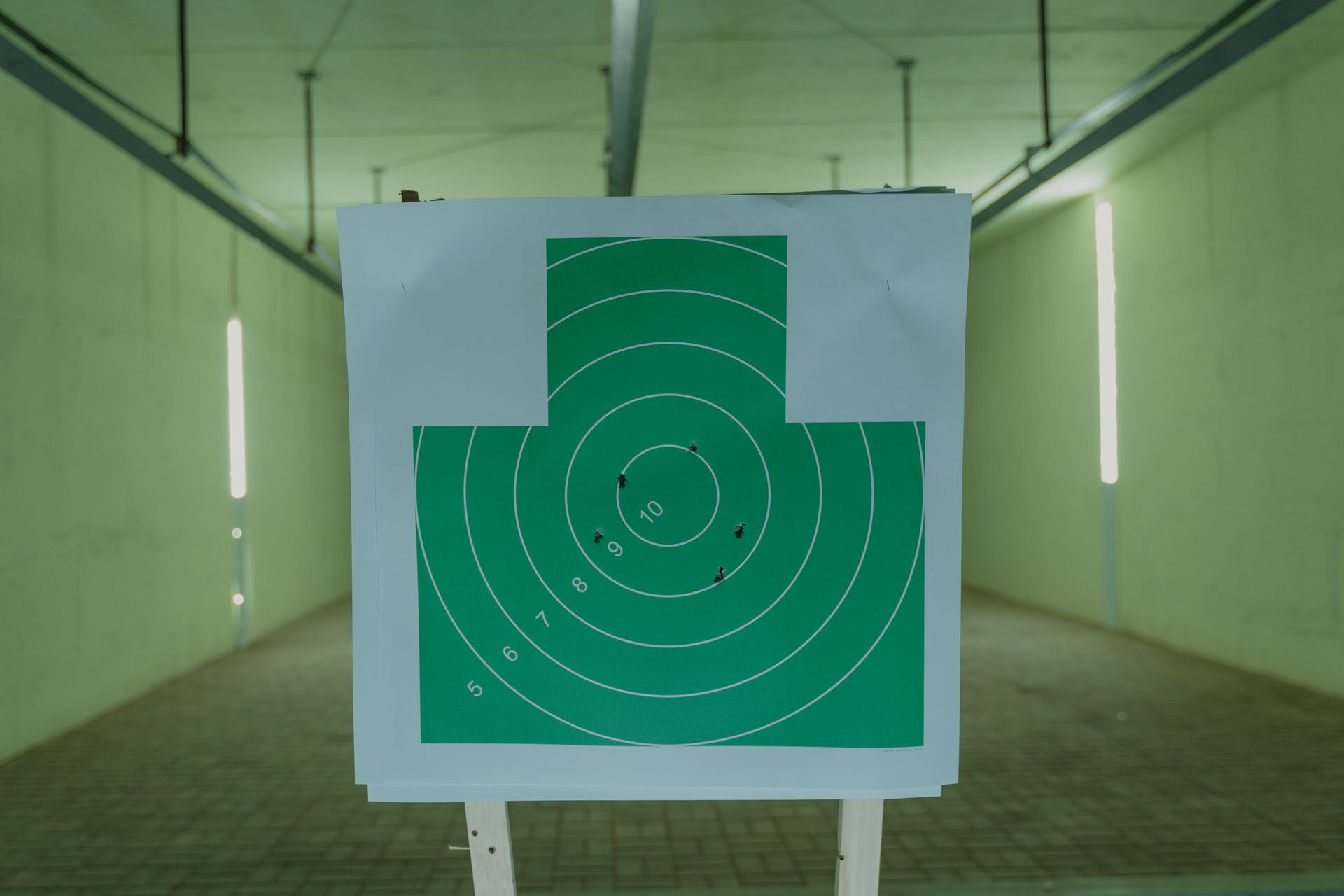
A used target at an indoor range. Photo by Tima Miroshnichenko via Pexels.
Lead exposure from shooting is usually discussed as a question of bullets. Federal researchers who study indoor ranges name two sources, not one. And much of the lead that reaches people travels on hands, clothes and shoes rather than only through the air on the firing line.
Two sources in every cartridge
A NIOSH Alert on indoor firing ranges identifies lead bullets and cartridge primers as the main sources of lead exposure. Hot propellant gases hit the exposed base of an unjacketed bullet, and heat and friction work on its sides as it travels down the bore. Both give off lead fumes and dust.
Bullets jacketed on both the base and the sides, or bullets made without lead, cut lead emissions at ranges by as much as 80 percent, according to the Alert. Because the primer is a separate source, NIOSH also recommends that ranges use non-lead primers made for range use. Cartridges loaded with them are sold in the most popular calibers.
How lead gets into the body
NIOSH’s summary of the Alert describes the route. Lead dust from shooting can be breathed in, or it can settle on surfaces and then move onto skin, especially the hands. From the hands it is swallowed with food, drinks and anything else that touches the mouth.
Symptoms of lead poisoning listed by NIOSH include nausea, vomiting, abdominal pain, headaches, anemia, weight loss and kidney problems.
What one case study measured
In one case the Alert describes, law enforcement trainees at an indoor range saw their average blood lead rise from 6.5 to 50.4 micrograms per deciliter over training. Average airborne lead was more than 40 times OSHA’s permissible exposure limit.
After the ventilation system was changed, airborne lead dropped below detectable levels. Switching to nylon-coated and copper-jacketed bullets cut airborne lead by 94 to 97 percent.
Lead goes home
NIOSH reports lead poisoning and neurological harm in children of workers who brought lead home on their clothes, skin or other surfaces. SAAMI’s guidance on take-home lead says the risk is greatest for children under six, pregnant women and developing fetuses, and that lead can migrate into workers’ vehicles as well as their homes.
NIOSH’s recommendations for workers apply just as well to anyone who shoots often:
- Wash hands, forearms and face before eating, drinking, smoking or touching other people.
- Change clothes and shoes before leaving the range.
- Wash range clothing separately from the family’s laundry.
- Wear gloves and eye protection when using chemicals to clean guns.
Outdoor ranges are not exempt
The Alert focuses on indoor ranges, but it notes that several studies have documented lead overexposure at outdoor ranges too, and that many of its recommendations apply there. Open air does not change the hand-to-mouth route NIOSH describes.
Blood tests and children
For children, CDC’s clinical guidance asks providers to follow up with education and further testing when a blood lead level is 3.5 micrograms per deciliter or higher. A household where someone shoots often is worth mentioning to a pediatrician.
Where this fits
Lead is one of two long-term exposures at a range. The other is noise, covered in our piece on hearing loss from gunfire. Lead in the field is a separate question, governed by the hunting rules in our non-lead ammunition explainer.
Sources
- NIOSH, Preventing Occupational Exposures to Lead and Noise at Indoor Firing Ranges (PDF, Alert 2009-136)
- NIOSH, Take Aim at Protecting Yourself: Preventing Lead Poisoning and Hearing Loss at Indoor Firing Ranges
- SAAMI, Take-Home Lead Hazards (PDF)
- CDC, Clinical Guidance for Blood Lead Levels
This article was researched and drafted with the assistance of AI tools and reviewed, fact-checked and edited by Leonidas Clark before publication. It is general information, not medical advice. Talk to a healthcare provider about blood lead testing.