Explainer
Field sharpening and bench sharpening are different jobs. At home you are reprofiling — removing metal to reset a bevel. In camp you are realigning and refreshing an edge that has gone dull enough to stop working.
Confusing the two is why people come home frustrated. You cannot rebuild a damaged edge on a log with a pocket stone, and trying wastes both time and steel.
What actually dulls a knife
Most field dullness is not metal loss. It is the very apex of the edge rolling over to one side under load. The steel is still there, folded.
That is good news, because rolled steel can often be straightened rather than ground away. It is why a few passes on a smooth steel or the spine of a ceramic rod can bring a knife back that felt hopeless a minute earlier.
Genuine damage — chips from bone or grit — is different, and that is a bench job.
Hold the angle, not the stone
The single biggest variable is angle consistency. A knife sharpened at a wandering angle gets a rounded, weak apex no matter how good the abrasive is.
The trick that works without a jig: find the bevel by feel. Lay the blade flat on the stone, then lift the spine until you feel the bevel sit flush. That is your angle. Most people who struggle are holding the knife too steep, because steep feels like it is doing more.
A Scandinavian or flat grind makes this dramatically easier, because the bevel is broad enough to register against the stone. That is a real advantage of that geometry in the field, discussed further in our piece on grind geometry.
What to carry
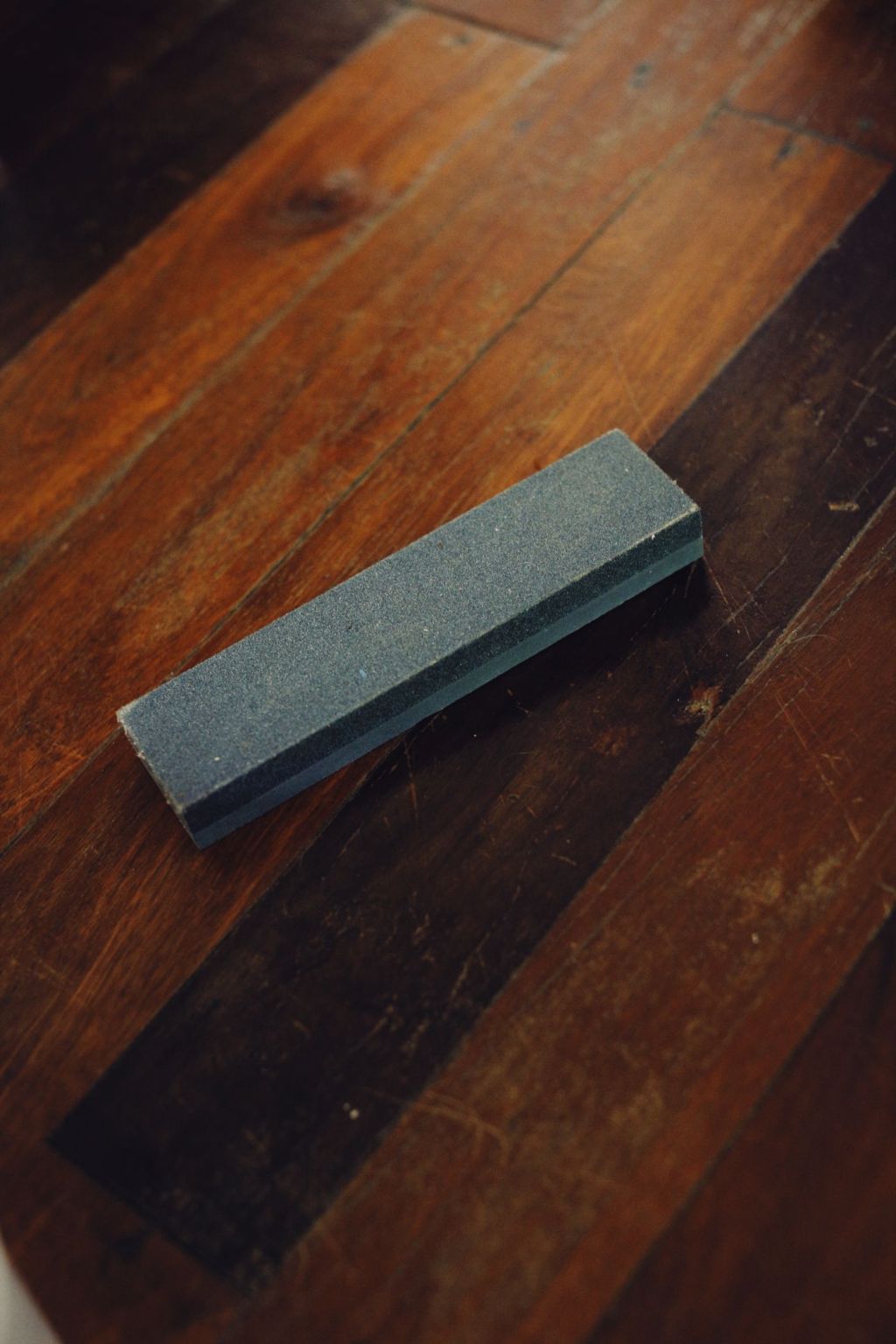
A small dual-grit diamond plate or ceramic rod covers nearly everything. Diamond cuts hard steels that natural stones struggle with; ceramic is fine for refining and realigning.
Water or spit is enough lubricant on most field stones. The purpose is to float away swarf so it does not glaze the surface.
Improvised abrasives work in a pinch — the unglazed foot ring of a ceramic mug, a smooth river stone, the rough side of a leather belt for stropping. None replace a stone, all beat nothing.
Stropping is the step people skip
After abrasive work, a few light passes on leather, a strip of cardboard, or even denim will remove the burr and align the apex. Edge trailing — dragging the spine-first direction — not edge leading.
This is often the difference between an edge that feels sharp and one that cuts.
Know when to stop
The goal in the field is functional, not perfect. An edge that slices through hide and cuts cord is doing its job.
Chasing a mirror polish on a stump costs daylight and removes steel you will want later. Do the maintenance work in camp; do the restoration work at home.
This article was researched and drafted with the assistance of AI tools and reviewed, fact-checked and edited by Leonidas Clark before publication.
 The 4x4 Life
Leave a comment