
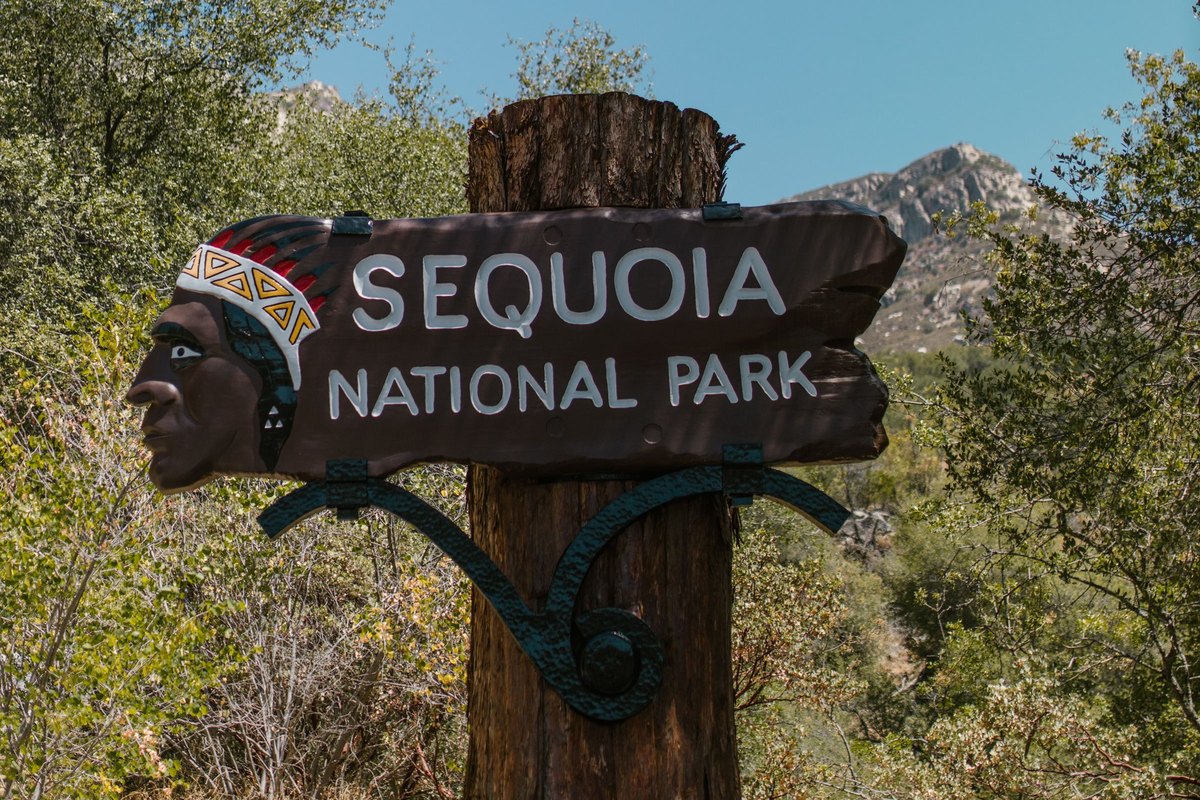
The entrance sign at Sequoia National Park, California. Photo by RDNE Stock project via Pexels.
Two entrance fee-free days remain on the National Park Service calendar for 2026: October 27, Theodore Roosevelt’s birthday, and November 11, Veterans Day. What changed this year is who they are free for. The Park Service says that beginning in 2026, free entrance on those days applies to U.S. citizens and residents only.
The two dates left
The Park Service’s 2026 list has eight fee-free dates, starting with Presidents Day in February. Only the last two are still ahead. October 27 falls on a Tuesday this year and November 11 on a Wednesday.
The waiver matters only where an entrance fee is charged. The Park Service notes that most of the sites it manages are free to visit on any day.
Nonresidents pay the regular fee
The introduction to the calendar still describes free admission for everyone, but the line beneath the dates and the agency’s fee FAQ both say the waiver is for U.S. residents. Nonresidents pay the regular entrance fee and any nonresident fee on those days unless they hold the $250 Non-Resident Annual Pass.
That nonresident fee is $100 per person aged 16 and older at 11 parks: Acadia, Bryce Canyon, Everglades, Glacier, Grand Canyon, Grand Teton, Rocky Mountain, Sequoia and Kings Canyon, Yellowstone, Yosemite and Zion. It is charged on top of the standard entrance fee unless the visitor is admitted with an annual or America the Beautiful pass.
Entry is free, other fees are not
The Park Service says other fees, including timed-entry and reservation fees, may still apply on fee-free days. Parks that use timed entry or tour reservations generally release them through Recreation.gov, so a free entrance day does not guarantee a way in at a park that requires a reservation.
The same limit shows up at the other agencies. The Bureau of Land Management says expanded amenity fees, such as developed camping, cabin rentals, group day use and special recreation permits, remain in effect. The Fish and Wildlife Service says its waiver does not cover concessionaire or permit fees for activities such as hunting, fishing or special tours.
Other land agencies use the same dates
Both dates also appear on the 2026 fee-free lists of the Forest Service, the BLM and the Fish and Wildlife Service. The Forest Service says it waives recreation fees at most day-use sites on those days, though participation at concession-operated sites may vary. Its page does not mention a residency limit.
The BLM waives standard amenity and day-use fees at many sites and, like the Park Service, limits the waiver to U.S. citizens and residents starting in 2026. The Fish and Wildlife Service says 30 refuge system locations charge an entrance fee, and all of them are free on both dates.
Which agency runs the ground you are standing on decides which of these rules applies, as we covered in who manages the public land you are standing on.
A refuge hunt still needs its permit
November 11 lands in the middle of many fall hunting seasons. On a national wildlife refuge, a fee-free day waives the entrance fee and nothing else. Any refuge hunting permit, state license or tag is still required, and the hunt rules for that refuge still apply.
Bring proof of residency
The Park Service has not described on its passes page how residency will be checked at the gate on fee-free days. For its resident annual pass, the FAQ lists accepted proof as a U.S. passport, a driver’s license or ID issued by a state or territory, or a permanent resident card. Carrying one of those is the simplest way to avoid a dispute at the entrance station.
How the annual pass compares
For frequent visitors, the America the Beautiful Resident Annual Pass costs $80 and covers entrance and standard amenity fees at sites run by six federal agencies. Senior passes for U.S. citizens and residents 62 and older cost $20 a year or $80 for life. Military, Access and fourth-grade passes are free to those who qualify. Passholders must show photo ID with the pass.
Fees at individual national forests are also in flux. We reported in August on eleven national forests proposing new recreation fees.
Sources
- National Park Service, Entrance Passes
- National Park Service, Nonresident Fees
- U.S. Forest Service, Passes and Permits
- Bureau of Land Management, Fee-Free Days
- U.S. Fish and Wildlife Service, Federal Recreation Passes
- U.S. Fish and Wildlife Service, Fee-Free Day: Veterans Day
This article was researched and drafted with the assistance of AI tools and reviewed, fact-checked and edited by Leonidas Clark before publication. Fees, dates and eligibility can change; confirm with the park or managing agency before you go.