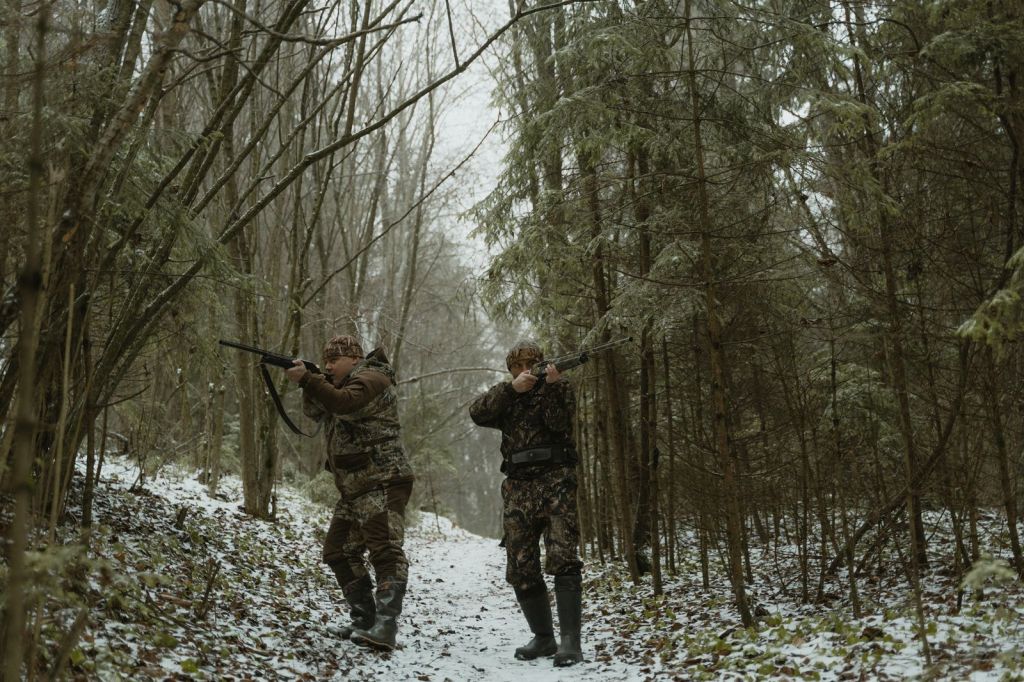
Michigan has removed the line that split the state into two different sets of deer-hunting firearms rules. The Natural Resources Commission voted in May to eliminate the Limited Firearms Deer Zone in the Lower Peninsula, and the change applies to the 2026 seasons — the first of which, the Liberty Hunt and Early Antlerless Firearm season, runs September 12–13.
The practical effect, in the Department of Natural Resources’ own words: hunters may now use all legal firearms, including bottleneck cartridges, throughout the Lower Peninsula. Firearms larger than .22 rimfire are permitted statewide.
What the zone was
The Limited Firearms Deer Zone covered roughly the portion of the state south of US-10. Inside it, deer hunters were restricted to shotguns and straight-walled cartridges rather than conventional bottleneck rifle cartridges.
The original rationale was population density. Southern Michigan holds most of the state’s people, and the restriction reflected a judgment about projectile range in country with more houses, roads and farmsteads per square mile than the north.
That judgment is what the commission revisited. Straight-wall cartridge allowances have been expanding across the Midwest for several years — Tennessee approved straight-walled cartridges on private land for its 2026 season, and Iowa dropped its cartridge shape requirement in favour of a diameter and muzzle-energy standard. Michigan has gone further by removing the geographic distinction altogether.
The other 2026 changes
The firearms zone was one item in a larger package. Several others change how the Lower Peninsula season is structured.
The statewide muzzleloader season drops from 10 days to three, beginning the first Friday in December. In the Lower Peninsula any legal firearm may be used during it, and it has been renamed the December Firearm Deer Season — a name change that follows directly from the zone removal.
The Late Antlerless Season opens earlier, running from the Monday after the December Firearm season through January 1. The Extended Late Antlerless and January Archery seasons have been eliminated, so all deer hunting now ends after January 1.
In the Upper Peninsula, the antlerless access drawing has been eliminated and Deer Management Units 351 and 352 rescinded.
The bigger change lands in 2027
The commission also approved Lower Peninsula changes that take effect with the 2027 seasons, and these are more consequential than the firearms rule.
Buck harvest will be limited to one buck per hunter. A single deer licence will be valid for one deer with at least three antler points on one side, or one antlerless deer. A combo licence will allow one antlered and one antlerless deer, or two antlerless. Existing unit-specific antler point restrictions stay in place.
There is also a pilot “earn a second buck” programme in the southern Lower Peninsula starting in 2027, under which a hunter must take an antlerless deer before becoming eligible for a second buck, which carries a four-point restriction. The DNR will name participating counties later.
Because the one-buck limit constrains what landowners can do about crop and horticultural damage, the commission expanded the exceptions allowing deer management assistance permits for antlered deer causing horticultural damage. Those require sign-off from wildlife and law enforcement supervisors.
What to check before you hunt
The firearms change is simple to state but easy to over-read. It removes a statewide zone restriction; it does not override local ordinances, safety zones around occupied buildings, or landowner permission requirements, all of which still apply.
Deer Management Unit rules also continue to vary, and several of the 2026 changes are unit-specific rather than statewide. The DNR publishes the full package in its deer hunting regulations, and the commission’s decision is set out in its May announcement.
This article was researched and drafted with the assistance of AI tools and reviewed, fact-checked and edited by Leonidas Clark before publication. Hunting regulations vary by unit and change frequently; confirm current rules with the Michigan DNR before you hunt.
 The 4x4 Life
Leave a comment