Explainer
The sheath is the part of a knife purchase people think about least and replace most often. It is also, in practice, where knives get lost and where a surprising share of cuts happen.
Retention versus access
Every sheath sits somewhere on a line between holding the blade so firmly it is slow to draw, and releasing so easily it can be lost.
Where you want to sit depends on the work. A knife used constantly around camp wants quick access. A knife carried on a long walk through brush wants retention above all.
The failure mode people underestimate is the second one. A blade lost on a hillside is gone.
The main types
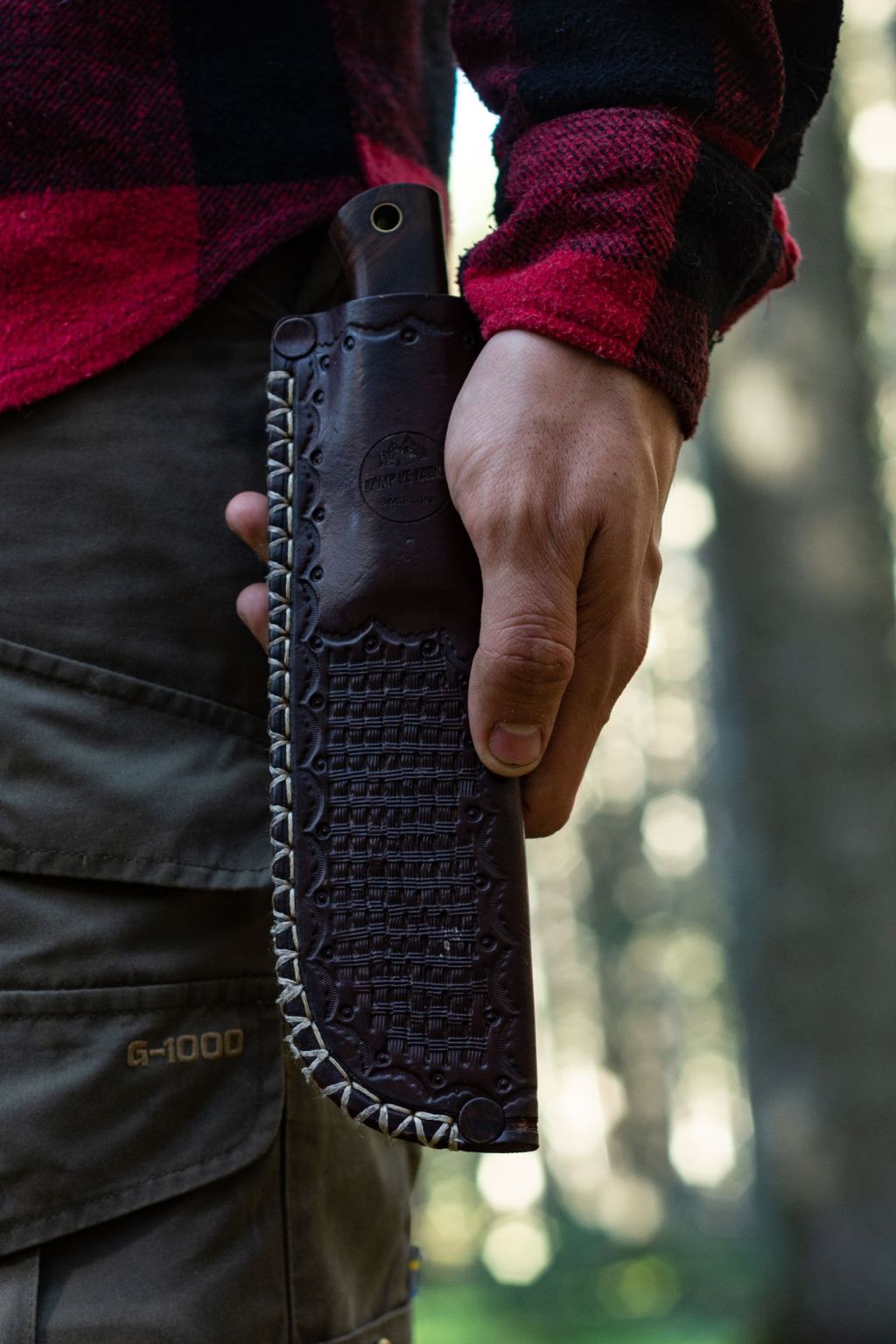
Leather is traditional, quiet and comfortable against the body. It holds shape well and usually retains by friction plus a strap. Its weakness is water — soaked leather stretches, loses retention, and if a blade is stored wet inside it, leather holds moisture against steel and promotes rust.
Kydex and similar thermoplastics are moulded to the blade and retain by a positive click. Retention is consistent wet or dry, and they shed water. They are noisier on the draw and can be less comfortable worn against the body.
Nylon is cheap, light and usually relies on a strap. Retention is the least positive of the three, and the material can abrade against a fine edge over time.
Carry position changes everything
A vertical belt sheath is secure and slow. A horizontal or scout carry across the small of the back is faster and stays clear when sitting or driving — which matters more than people expect if you spend time in a truck.
Dangler loops let the sheath swing rather than binding at the hip when you crouch or climb. That is a genuine comfort improvement on foot.
Neck carry keeps a small blade instantly available and is the easiest to lose if retention is not positive.
Two habits worth having
Check retention periodically. Leather relaxes, straps stretch, snaps wear. A sheath that held a blade firmly two seasons ago may not now.
And never store a knife in a wet sheath. Dry both separately. Steel left in damp leather is how good knives develop pitting that no amount of later care removes.
This article was researched and drafted with the assistance of AI tools and reviewed, fact-checked and edited by Leonidas Clark before publication.
 The 4x4 Life
Leave a comment