
Explainer
Catch and release is a conservation practice, not a guarantee. Released fish suffer delayed mortality, and the factors driving it are well studied and largely avoidable.
Air exposure
Gills are designed to extract oxygen from water and collapse in air. Time out of water is one of the strongest predictors of whether a released fish survives.
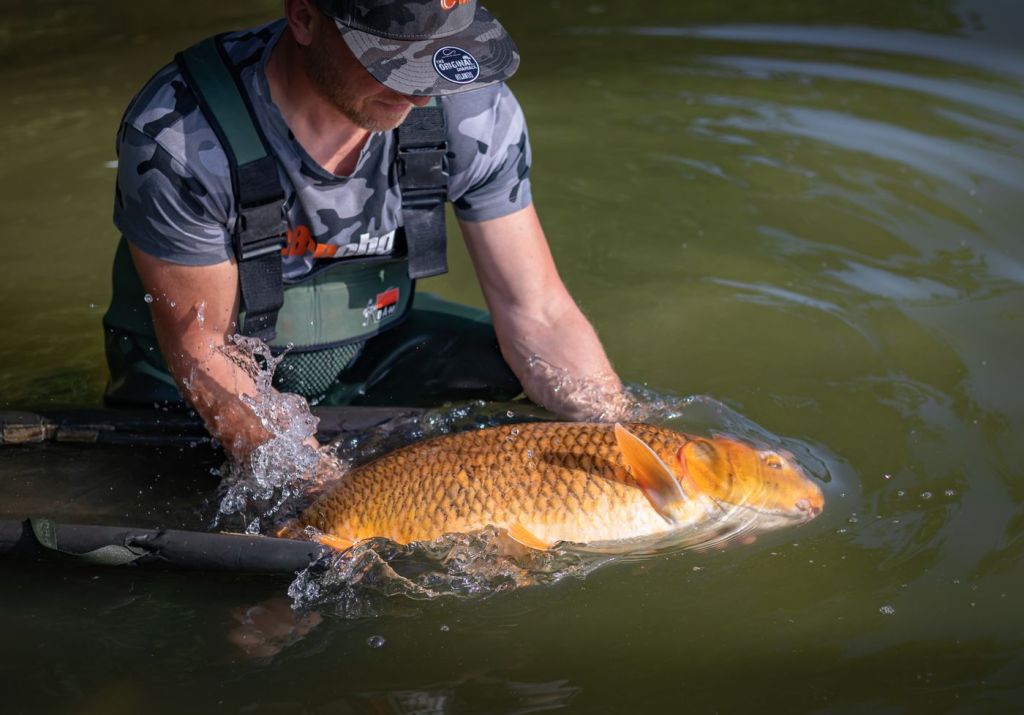
The practical standard is to keep the fish in the water while unhooking wherever possible, and if it must come out, to keep that time as short as holding your own breath comfortably.
Handling
Fish are covered in a slime layer that resists infection. Dry hands, dry cloth and dry surfaces strip it.
Wet hands before touching. Avoid squeezing behind the gill plates, which damages the heart and gills. Support the body horizontally rather than holding a heavy fish vertically by the jaw, which can damage the spine and jaw structure.
Hooking location
A fish hooked in the lip survives at far higher rates than one hooked deep in the throat or gills.
This is why regulations sometimes specify hook types. Circle hooks tend to rotate and catch in the corner of the mouth, and are frequently mandated in fisheries with high release rates. Barbless hooks, or barbs pinched down, come out faster and cause less tearing.
If a fish is hooked deeply, cutting the line close is generally better than extraction. Many hooks corrode or are shed.
Water temperature
Warm water holds less dissolved oxygen, and a fish fighting in warm water accumulates lactic acid it may not recover from.
This is the reason for hoot-owl restrictions — closures that prohibit fishing during the warmest afternoon hours on trout streams in summer. They exist because release mortality climbs sharply above certain temperatures.
The practical version: if the water is unusually warm, the responsible choice is often to stop fishing rather than to fish carefully.
Reviving
Hold the fish upright, facing into gentle current, until it swims off under its own power. Do not move it back and forth — that forces water the wrong way through the gills.
This article was researched and drafted with the assistance of AI tools and reviewed, fact-checked and edited by Leonidas Clark before publication. Regulations vary by water and change in season; confirm with the managing agency before you fish.
 The 4x4 Life
Leave a comment