Explainer
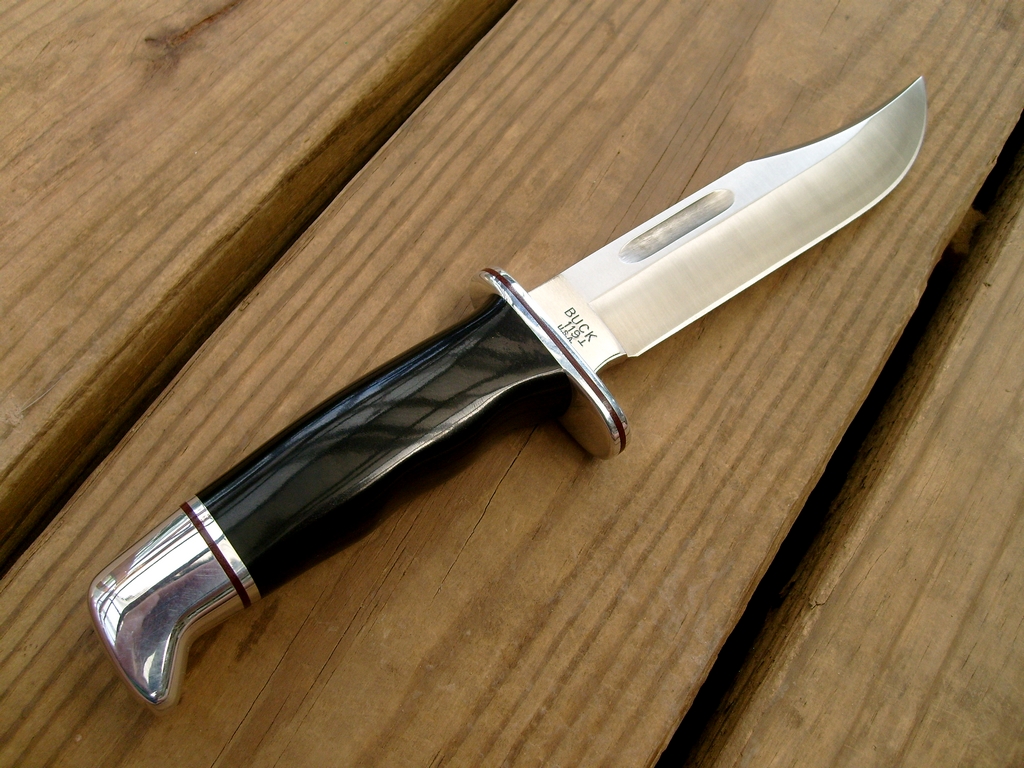
The steel designation stamped on a blade — 1095, 420HC, D2, S30V — is the first thing people look for and the most over-read piece of information on a knife.
It tells you something real. It does not tell you nearly as much as the internet suggests, and understanding why is more useful than memorising a ranking.
The trade-off that governs everything
Knife steel is a compromise between three properties that pull against each other.
Hardness is resistance to deformation. Harder steel holds an edge longer because the apex resists rolling and flattening under use.
Toughness is resistance to fracture. Tough steel bends or dents rather than chipping when it hits bone, a hidden staple, or the ground.
Corrosion resistance is resistance to rust, and it comes primarily from chromium content.
The problem is that these fight. Pushing hardness up generally costs toughness. Adding enough chromium for stainless behaviour changes the carbide structure in ways that usually cost something else. There is no steel that maximises all three, which is why there is no best steel — only steel better or worse suited to a job.
Why the same steel performs differently
Here is the part most buying guides skip: heat treatment matters as much as alloy.
Steel arrives at the maker as a bar with a chemical composition. What it becomes depends on how it is hardened, quenched and tempered — the temperatures used, the times held, whether it is cryogenically treated. Two knives stamped with the same steel, from two makers, can behave meaningfully differently.
A well-heat-treated budget steel routinely outperforms a poorly-treated premium one. This is why comparing knives by steel name alone is close to meaningless, and why makers with a reputation for consistent heat treatment command loyalty that seems disproportionate to their material choices.
The practical implication: a maker’s track record is more informative than the letters on the blade.
Hardness is measured, and the number is published
Hardness is expressed on the Rockwell C scale, usually written HRC. Most fixed-blade outdoor knives land somewhere in the high 50s to low 60s.
Lower in that range generally means a blade that is easier to sharpen in the field and more forgiving of abuse. Higher generally means longer edge life and less tolerance for prying or lateral load.
Neither is better. A knife that holds an edge for three days but chips on bone is a bad choice for butchering. A knife that dulls quickly but resharpens on a rock is a bad choice if you did not bring a stone.
Carbon versus stainless, honestly
High-carbon steels — the 10-series, for example — are generally easy to sharpen, take a keen edge, and rust if you look at them wrong. They reward maintenance and punish neglect. A patina forms with use, and that oxide layer offers some protection.
Stainless steels resist corrosion but are typically harder to bring back once genuinely dull, and the tools that cut them well are not always the tools in your pack.
If the knife lives in a damp truck or gets used around saltwater, corrosion resistance stops being a preference and starts being the deciding factor.
What to actually ask
Rather than which steel is best, three questions get you further:
What is this knife going to do most often — game processing, food, wood, or general camp work? What conditions will it live in between uses? And can I sharpen it with what I own and carry?
That last one eliminates more options than any steel chart. A blade you cannot maintain is a blade that gets progressively worse from the day you buy it.
This article was researched and drafted with the assistance of AI tools and reviewed, fact-checked and edited by Leonidas Clark before publication. It explains general principles; specific performance varies by maker and heat treatment.
 The 4x4 Life
Leave a comment