Explainer
Batoning — driving a knife through a log by striking the exposed spine with a piece of wood — generates strong opinions. It is worth separating what is technique from what is marketing.
The mechanics
The blade acts as a wedge. Force is applied to the spine, transmitted through the steel, and used to separate wood fibres.
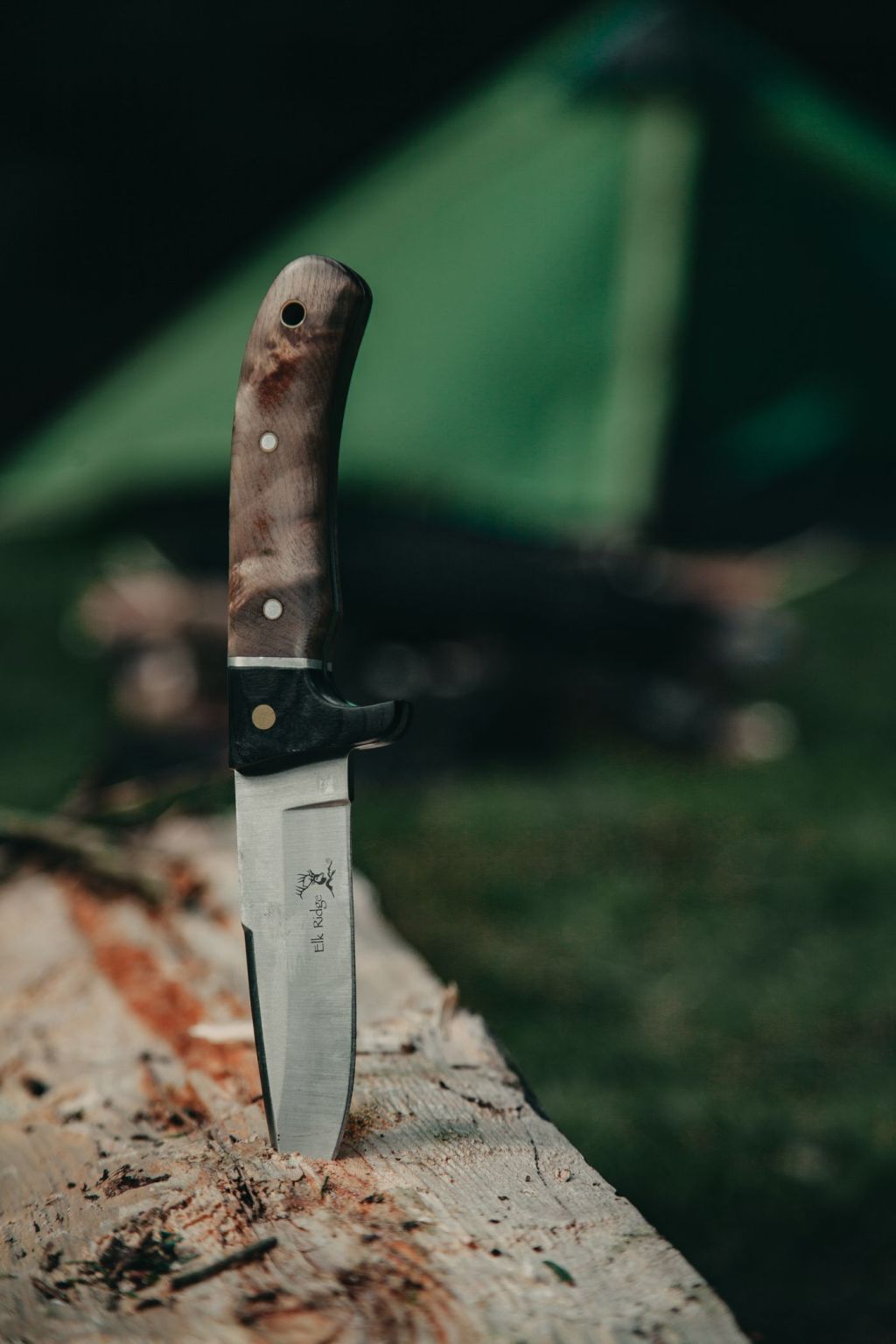
This loads the knife in a way ordinary cutting never does: the spine takes repeated impact, the blade takes lateral stress as the split opens, and the point where the blade exits the handle takes the concentrated load of both.
That last point is why tang construction matters so much here, and why a partial tang is the wrong tool for the job.
Why it is a legitimate technique
In wet conditions, the dry wood is inside the log. Splitting is often the only realistic route to a fire when everything on the surface is soaked.
If you are carrying one blade and no axe, batoning is the technique that turns a standing dead limb into fuel. Dismissing it entirely ignores the situation it exists to solve.
Why it stresses the knife
Impact on the spine is the load steel is least suited to. Harder, higher-edge-retention steels — the ones that hold an edge beautifully — are generally the ones most prone to chipping under shock.
Lateral force is the other problem. As the split opens, the blade gets twisted. Steel is strong along its length and comparatively weak across it.
Knots are where knives break. A knot deflects the blade and converts a clean downward split into a twisting load at exactly the moment you are hitting harder.
If you are going to do it
Use a wooden baton, not a rock or another blade. Split small — a log you can reasonably get through, not the largest one available.
Strike the spine over the section still inside the wood, not the tip hanging out the far side, which is the most common way tips snap.
Avoid knots. Go around them or pick a different piece.
And accept the trade-off honestly: batoning is hard on a knife. A blade used this way will need more maintenance and will eventually show it. That is a reasonable price for a fire when you need one — it is not free.
This article was researched and drafted with the assistance of AI tools and reviewed, fact-checked and edited by Leonidas Clark before publication.
 The 4x4 Life
Leave a comment