Explainer
Spotting is the practice of one person outside the vehicle guiding the driver over an obstacle they cannot see. It is a skill, and done badly it is worse than not spotting at all.
Agree the system first
Before anyone moves, agree: who is spotting, what the signals mean, and that only that person gives direction.
Multiple people shouting is the most common failure. A driver receiving three sets of instructions defaults to their own judgement at exactly the moment they had least information.
Agree a clear stop signal that cannot be mistaken for anything else. A closed fist is conventional. It means stop immediately, and it is the only signal that should ever be given urgently.
Position
The spotter stands where the driver can see them without contortion, in front and off to one side, never directly in the vehicle’s path and never where a slip would put them under it.
If the driver cannot see the spotter, the spotter must move. Never expect the driver to find you.
Speak in vehicle terms
“Left” is ambiguous — your left or the driver’s? The convention is to use the driver’s orientation and to be explicit about which wheel.
Useful instruction sounds like: driver front tyre onto the rock, one vehicle width, slow. Not: a bit more, that way.
Point at where you want the tyre, and hold the point.
The judgement part
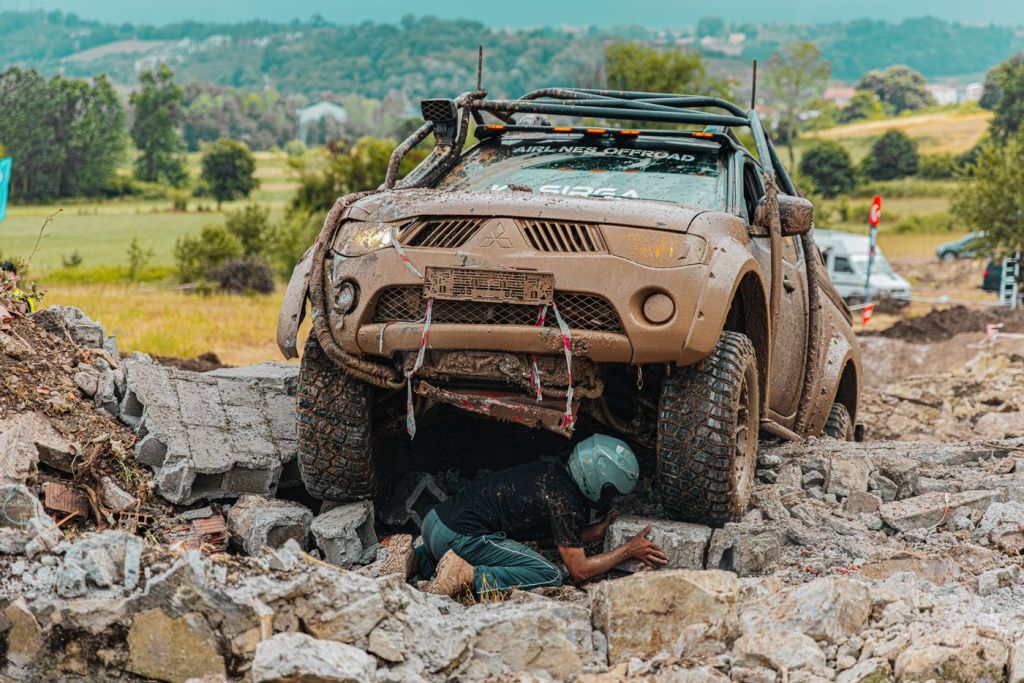
The spotter’s real job is not steering the vehicle, it is seeing what the driver cannot — the rock about to meet a differential, the sidewall about to load against an edge, the angle building toward a tip.
That means watching the vehicle, not the terrain, and knowing the angles of the vehicle you are guiding.
And the spotter can call it off. Being the person who says the obstacle is not worth it is part of the role, not a failure of it.
This article was researched and drafted with the assistance of AI tools and reviewed, fact-checked and edited by Leonidas Clark before publication. Confirm current route status and rules with the managing agency before you travel.
 The 4x4 Life
Leave a comment