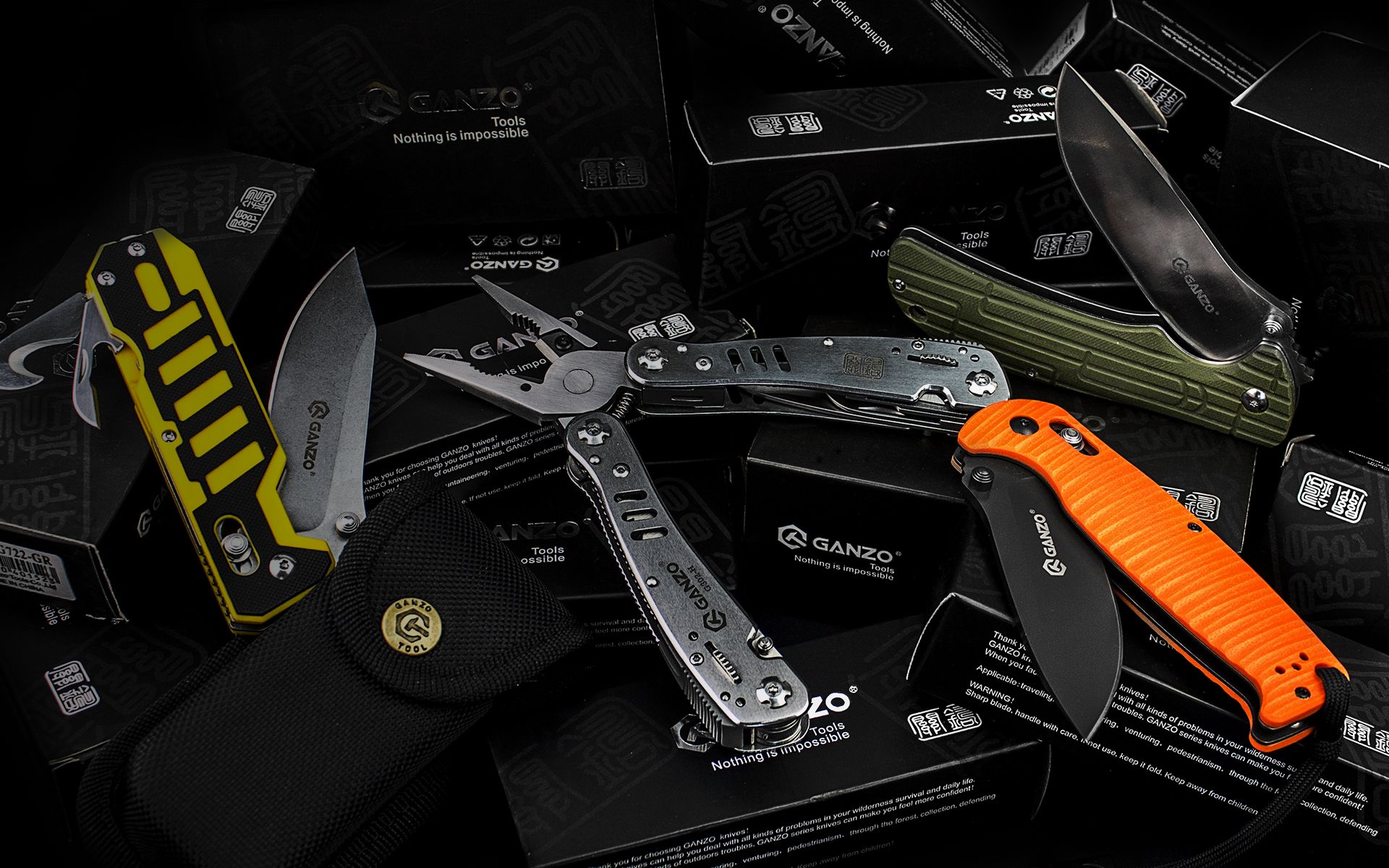
Folding knives and multi-tools. Photo by MYKOLA OSMACHKO via Pexels.
Fall hunting trips mean knives in luggage. TSA’s rule for blades is simple, but the edge cases catch people: multi-tools, a forgotten pocketknife, and the assumption that TSA’s rules are the only ones that matter at the destination.
The basic rule
TSA’s entry for knives is short. They are not allowed in carry-on bags and are allowed in checked bags. The exceptions for carry-on are knives with rounded blades and blunt edges without serrations, such as butter knives, and plastic cutlery.
The same entry says any sharp object in a checked bag should be sheathed or securely wrapped to prevent injury to baggage handlers and inspectors. A fixed blade in a proper sheath, or a folder closed and wrapped, meets that.
Multi-tools follow the blade
TSA says multi-tools with knives of any length are prohibited in carry-on bags and belong in checked bags. A multi-tool with scissors under four inches may go in a carry-on, and a multi-tool without blades is allowed in either. The blade length people argue about does not matter. The presence of a knife does.
The items around the knife
Several things that travel with hunting and camping gear have their own entries:
- Box cutters go in checked bags only, with or without blades.
- Axes and hatchets go in checked bags only.
- Scissors may go in a carry-on if the blades are less than four inches from the pivot point.
- Tools seven inches or shorter may be allowed in a carry-on. Longer tools must be checked.
The officer has the final word
Every one of these entries ends the same way: the final decision rests with the TSA officer on whether an item is allowed through the checkpoint. An item that is technically allowed can still be refused.
What a mistake can cost
TSA’s civil enforcement page says the agency may impose civil penalties of up to $17,062 per violation per person. Its penalty table lists knives that open automatically, such as switchblades, gravity-opening knives such as butterfly knives, double-edged knives and daggers, meat cleavers, machetes, and axes and hatchets.
For those items found at a checkpoint, the table calls for a warning notice on a first violation, with later violations drawing penalties of $450 to $2,570. TSA also notes that state and local governments have their own laws, so a prohibited item can bring criminal enforcement as well as a TSA penalty.
TSA rules are not knife laws
TSA decides what goes through a checkpoint. It does not decide what you may carry once you land. A knife that is fine in a checked bag can be restricted at the destination, by state law, a city ordinance or the rules of a park. Our guides to federal knife law and checking state knife law cover how to look that up.
Firearms and ammunition run under a separate set of rules. Our piece on transporting firearms across state lines covers the travel side.
A packing habit that helps
A pocketknife or multi-tool forgotten in a jacket or daypack is still a prohibited item at the checkpoint. Emptying the carry-on pack and pockets into the checked bag before leaving for the airport, with every blade sheathed or wrapped, avoids the issue.
Sources
- TSA, What Can I Bring? Knives
- TSA, What Can I Bring? Multi-tools
- TSA, What Can I Bring? Multi-tool without blades
- TSA, What Can I Bring? Box cutters
- TSA, What Can I Bring? Axes and hatchets
- TSA, What Can I Bring? Scissors
- TSA, What Can I Bring? Tools
- TSA, Civil Enforcement
This article was researched and drafted with the assistance of AI tools and reviewed, fact-checked and edited by Leonidas Clark before publication. It is general information, not legal advice. Knife law varies by state and locality and changes; check current law where you are.