
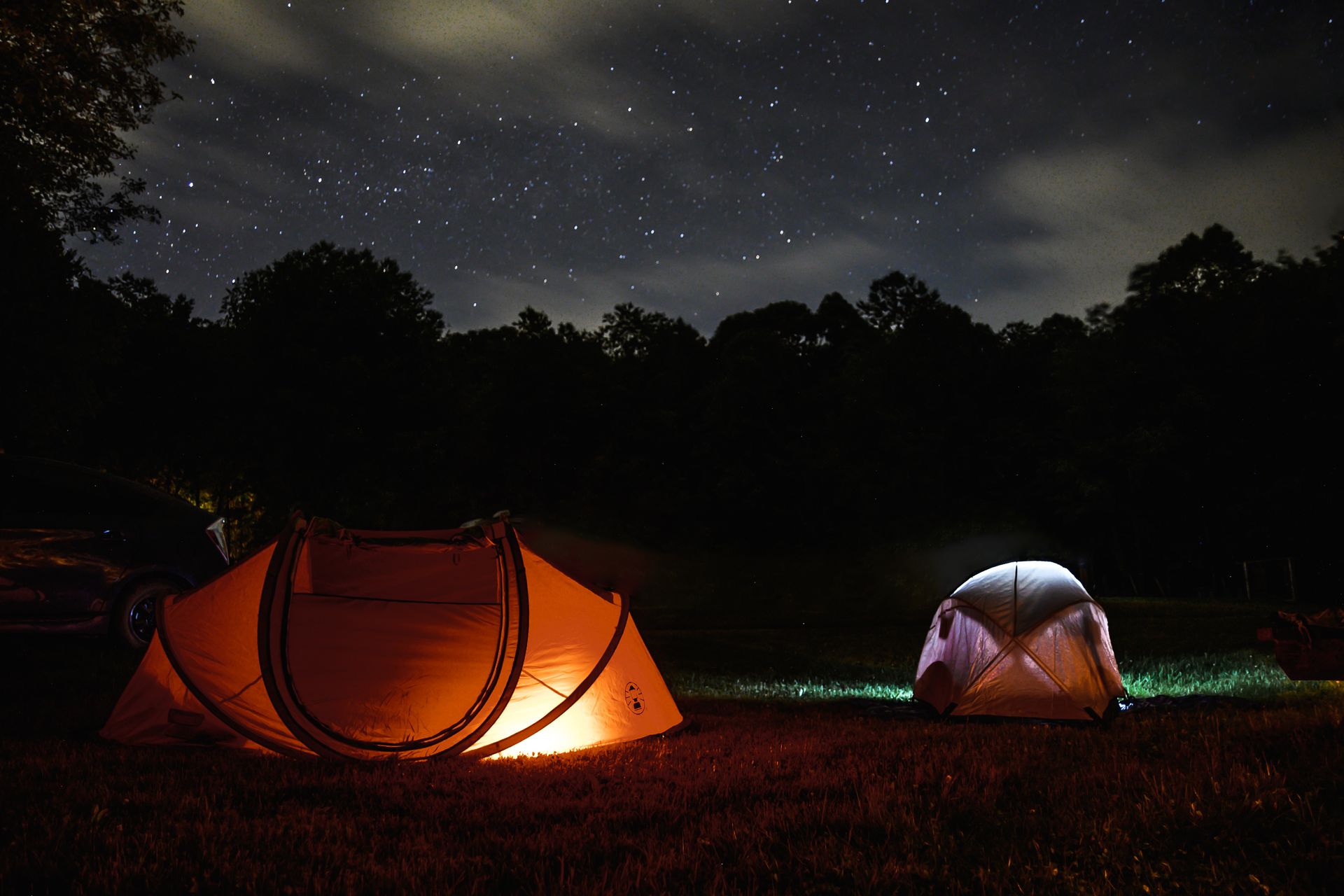
Two lit tents at night. Photo by Matthew DeVries via Pexels.
Cold October nights in camp push people to bring a heater, a lantern or a stove inside the tent or camper. Every fuel-burning device makes carbon monoxide. In a small enclosed space with people asleep, there may be no warning at all.
What carbon monoxide does
Carbon monoxide is an odorless, colorless gas that kills without warning, according to the CDC. Each year more than 400 Americans die from unintentional poisoning not linked to fires, more than 100,000 visit an emergency department, and more than 14,000 are hospitalized.
The most common symptoms are headache, dizziness, weakness, upset stomach, vomiting, chest pain and confusion. The CDC warns that people who are asleep or drunk can die before they have any symptoms.
Every fuel-burning device makes it
The CDC lists fumes from cars and trucks, small engines, stoves, lanterns, grills and furnaces as sources. Its guidance for indoor spaces applies directly to camp gear:
- Never burn charcoal indoors, whatever color it is.
- Never use a portable gas camp stove indoors.
- Do not use portable flameless chemical heaters indoors.
- Never use a generator indoors, even with doors and windows open.
A tent counts as indoors
The Consumer Product Safety Commission says people die every year from carbon monoxide poisoning from portable camping heaters, lanterns and stoves used inside tents, campers and vehicles. Its advice is not to use portable heaters or lanterns while sleeping in enclosed areas such as tents, campers and other vehicles.
A CPSC safety alert says the agency knows of at least 12 deaths since 2020 associated with camping equipment, including grills, lanterns and stoves.
Altitude raises the risk
CPSC says the warning matters most at high altitudes, where the risk of carbon monoxide poisoning is greater. Elk camps and high-country trips put many hunters in exactly those conditions in the fall.
Symptoms that look like a cold
Carbon monoxide reduces the blood’s ability to carry oxygen, and low blood oxygen can lead to loss of consciousness and death, according to CPSC. The agency notes that poisoning is easily mistaken for a cold or the flu and is often detected too late. Its advice is to see a doctor if anyone in the group develops cold or flu-like symptoms while camping.
Trucks and exhaust
The CDC recommends having a vehicle’s exhaust system checked every year, because a small leak can let carbon monoxide build up inside. Its guidance also covers open tailgates. If only the tailgate of an SUV is open, exhaust can be pulled into the vehicle, so vents or windows should be opened too.
Alarms and warmth
The CDC recommends battery-operated or battery-backup carbon monoxide detectors near every sleeping area at home, with batteries checked when the clocks change each spring and fall. Clocks fall back on November 1 this year. The same kind of battery-powered alarm can go in a camper or cabin.
Our pieces on hypothermia and winter travel on public land cover the cold side of the problem.
Sources
- CDC, Carbon Monoxide Poisoning Basics
- U.S. Consumer Product Safety Commission, Portable Heaters and Camping Equipment
- U.S. Consumer Product Safety Commission, CPSC Warns of Carbon Monoxide Poisoning Hazard with Camping Equipment (PDF)
This article was researched and drafted with the assistance of AI tools and reviewed, fact-checked and edited by Leonidas Clark before publication. It is general safety information, not medical advice.