The serrated-versus-plain argument usually gets settled by preference. It is better settled by asking what the edge is actually doing to the material, because the two cut by different mechanisms and each fails at what the other is good at.
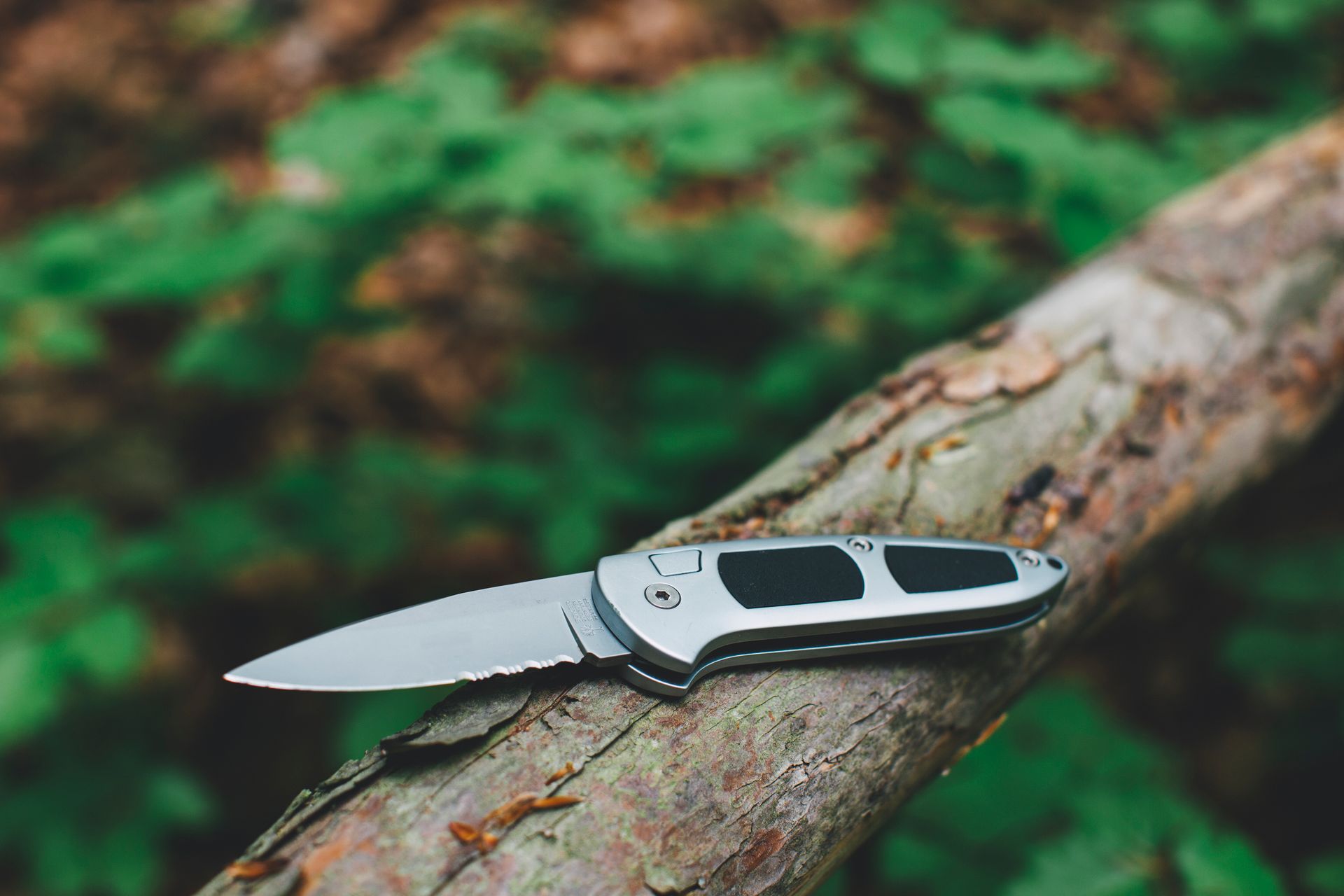
Folding pocket knife with a combination plain and serrated edge. Photo by Markus Spiske via Pexels.
Two different mechanisms
A plain edge cuts by pressure. The apex concentrates force onto a narrow line, the material parts, and the bevel wedges the two halves away from each other. Push harder and it cuts deeper.
A serrated edge cuts by concentration and sawing. The points of the scallops take the initial load across a fraction of the contact area, so the pressure at each point is far higher than a plain edge would generate. The recessed curves then do the cutting as the blade draws, with the material trapped in the scallop rather than sliding away from it.
That difference explains everything else about the two.
What serrations are genuinely better at
Fibrous material under tension. Rope, webbing, seatbelt, cordage, heavy plastic strapping. The points bite instead of skating, and the draw does the work.
Material with a hard skin and a soft interior, which is why bread knives are serrated and why the same geometry handles things like hose and some rind.
Cutting when the edge is no longer sharp. This is the underrated one. A serrated blade that has lost its keenness still has points, and points still concentrate force. A plain edge in the same condition skates. That is why rescue and utility knives tend to be serrated — they work after months of neglect, which is a real design requirement when a tool lives in a vehicle.
What plain edges are better at
Anything where the cut surface matters. A plain edge leaves a clean line; serrations leave a torn, scalloped one, because the material between the points is pulled rather than severed.
Push cuts — cutting where you cannot draw the blade, only press. Serrations need travel. Without it they have only the points contacting the material, and the recesses never engage.
Controlled work near the tip: shaving, carving, detail. The scallops make the edge unpredictable at the millimeter scale.
And field dressing, which is the case that matters most to a lot of people reading this. A serrated edge in a body cavity tears rather than parts tissue, catches on membrane, and is unpleasant to control against bone. It is the wrong tool and it is difficult to clean afterwards.
Sharpening is the real cost
A plain edge can be maintained by anyone with a stone and a few minutes, and we have covered both the geometry and the field technique.
Serrations cannot. Each scallop is a separate curved bevel, usually ground on one side only, and sharpening means working the inside of each one individually with a tapered rod sized to that scallop — then removing the burr from the flat side without rounding it over.
It is slow, it requires a tool most people do not own, and it is why the overwhelming majority of serrated knives in circulation have never been sharpened once. They are used until they stop working and then replaced.
That is a legitimate way to own a tool. It is worth deciding on it deliberately rather than discovering it when the edge goes.
The combo edge
Part serrated near the handle, part plain toward the tip. It is the most common configuration sold and the most criticized.
The criticism has a point: on a blade of ordinary length you end up with too little of each. Three inches of plain edge is a short knife for detail work, and an inch and a half of serration is a short saw for rope.
It makes more sense on a longer blade, and it makes sense as a compromise when the knife genuinely is the only one you will have. On a four-inch folder that lives in a pocket beside a fixed blade in a pack, it is usually the worse choice in both directions.
Choosing, in one line each
If the knife is for game, food and general woodcraft: plain, every time.
If the knife lives in a truck, a boat or a pack for cutting rope, strap and webbing under load, and will never be sharpened: serrated is the honest answer.
If you want one knife for everything and will maintain it: plain, and accept that rope is slower.
Steel choice interacts with all of this — a plain edge in a steel that holds an apex changes the maintenance calculation considerably, which we covered in hardness, toughness and what blade steel numbers mean.
One legal note worth mentioning: edge type is not usually what statutes regulate. Blade length, locking mechanism and opening method are. A serrated edge is not inherently more restricted than a plain one in most jurisdictions, though that is worth confirming where you live rather than assuming.
This article was researched and drafted with the assistance of AI tools and reviewed, fact-checked and edited by Leonidas Clark before publication. Knife laws vary by state and locality; confirm the rules where you are before carrying.