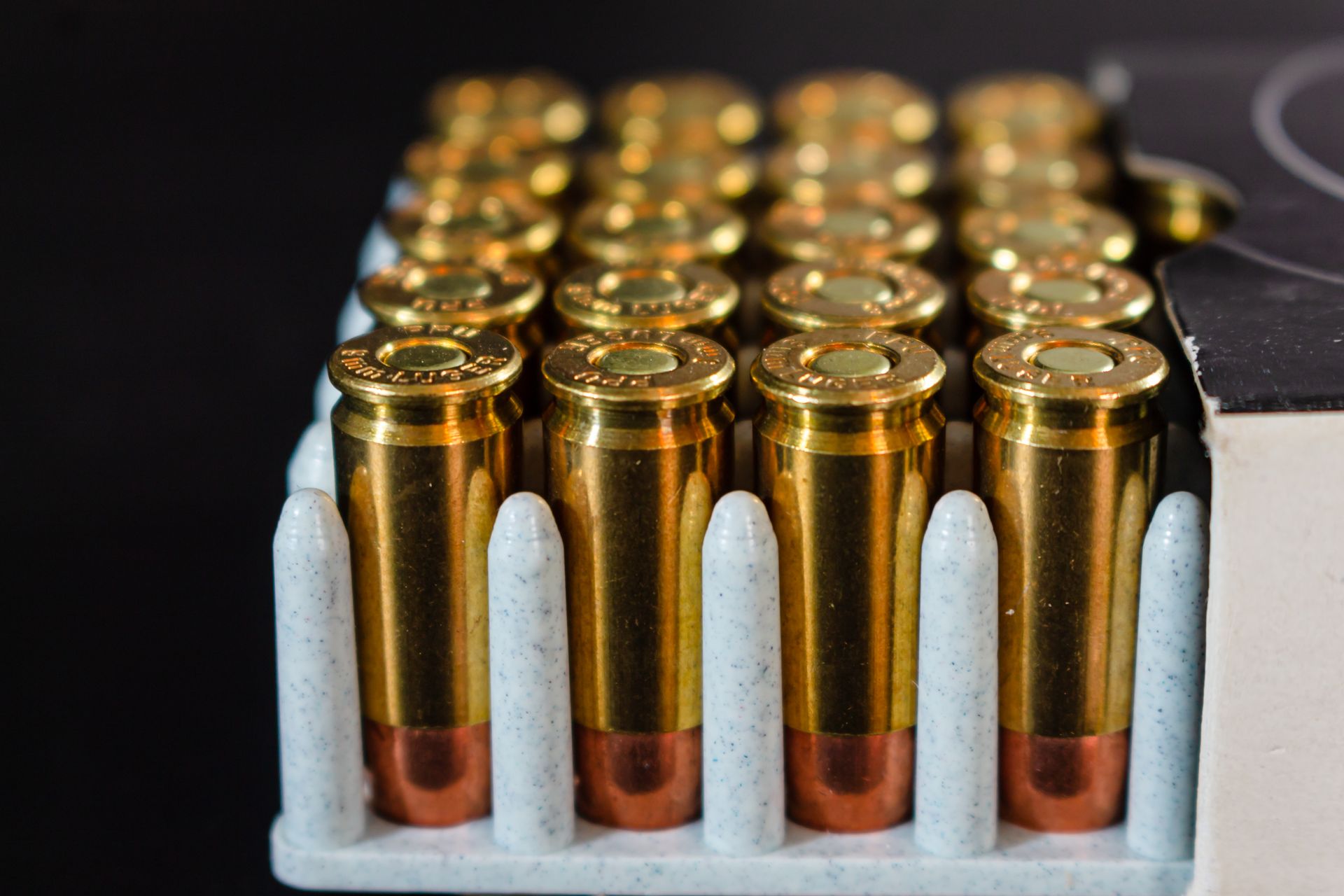
Boxed rifle cartridges. Photo by Terrance Barksdale via Pexels.
When a house, garage or truck with ammunition inside catches fire, the common assumption is that the cartridges will start firing like guns and spray bullets in every direction. Decades of testing by the firearms industry’s standards body show that loose and boxed ammunition does not behave that way. The real hazards are smaller, and they are different.
A cartridge needs a chamber to work
Smokeless powder in consumer packaging is meant to burn, not explode, according to SAAMI’s storage and handling recommendations. Inside the closed chamber of a gun, that burning builds pressure that drives the bullet down the bore. Ignited outside a chamber, a cartridge or shotshell will likely just burst.
A 1977 Fire Journal account of SAAMI’s tests, reprinted by SAAMI, explains the mechanism. Pressure inside a case has to reach several thousand pounds per square inch for a cartridge to discharge as it does in a gun. Without a chamber holding it tight, the case gives way long before that.
What the burn tests found
SAAMI’s firefighter testing program used up more than 400,000 rounds in scenarios that included 65-foot drops, blasting caps, bullet impacts, crushing by a bulldozer, open bonfires, and fires in a retail store and a truck trailer. The results showed that ammunition outside a firearm is unlikely to ignite from impact, does not set off neighboring cartridges in a chain reaction, and does not mass explode. Firefighters using water and standard protective gear with breathing apparatus can control it.
The earlier tests described in the Fire Journal article burned 145,500 rounds. Most of the whizzing sounds people report from such fires, the article says, are primer cups popping out of cases. Few bullets were found more than 40 or 50 feet from the fire.
The exception is a loaded gun
A cartridge in a firearm’s chamber is a different matter. SAAMI’s recommendations warn that a chambered round set off by the heat of a fire will send its bullet down the barrel with the same velocity and energy as if the trigger had been pulled.
That is the strongest argument in this subject for storing guns unloaded. Our piece on safe storage laws covers what the law requires on top of that.
Fragments still fly
Low hazard does not mean no hazard. A cartridge that bursts may throw its primer, its bullet and pieces of the case, according to SAAMI. In the Fire Journal tests, some cases landed as far as 135 feet away. SAAMI advises firefighters to keep their turnout gear on until the fire is fully out.
Heat damages rounds that never went off
Ammunition that came through a fire without igniting is not necessarily safe to shoot. SAAMI’s 2025 guidance on fire-exposed firearms and ammunition says heat can permanently degrade the powder and primer compounds. Damaged primers misfire more often.
Degrading powder can use up the stabilizers meant to slow its breakdown, after which it can change how fast it burns. That can produce pressure high enough to damage a gun, or so low that a bullet sticks in the bore and the next shot hits the obstruction. Once the stabilizer is gone, the breakdown can continue until a loaded round goes off on its own. SAAMI recommends disposing of ammunition, powder and primers exposed to temperatures above about 200°F, following local, state and federal rules.
Firearms that went through a fire
The same guidance covers guns. The high temperatures of a house fire can alter heat-treated parts such as the barrel and bolt lugs, even inside a safe sold as fireproof, and the warping may be too slight to see. SAAMI says a gun exposed to fire or extreme heat should not be fired until the manufacturer or a qualified gunsmith has inspected it.
What follows for storage
SAAMI’s recommendations are short:
- Keep ammunition in its original packaging or packaging designed for it.
- Store it somewhere cool and dry, away from solvents, heat sources and open flame.
- Do not leave it in a vehicle for long periods in direct sun or high heat.
- Store it separately from firearms, and out of reach of anyone without permission to use it.
None of this makes a fire safe. It means that the boxes on the shelf are a smaller problem than a loaded gun in the closet. For the rules on moving firearms and ammunition, see our piece on transporting firearms across state lines.
Sources
- SAAMI, Sporting Ammunition and the Firefighter
- SAAMI, Recommendations for Safe Ammunition Storage and Handling (PDF)
- SAAMI, Facts About Sporting Ammunition Fires (PDF, reprinted from Fire Journal, January 1977)
- SAAMI, Guidance on Firearms, Ammunition and Propellant Exposed to Fire (PDF)
This article was researched and drafted with the assistance of AI tools and reviewed, fact-checked and edited by Leonidas Clark before publication. It is general information. Follow the manufacturer’s guidance for your own firearms and ammunition.