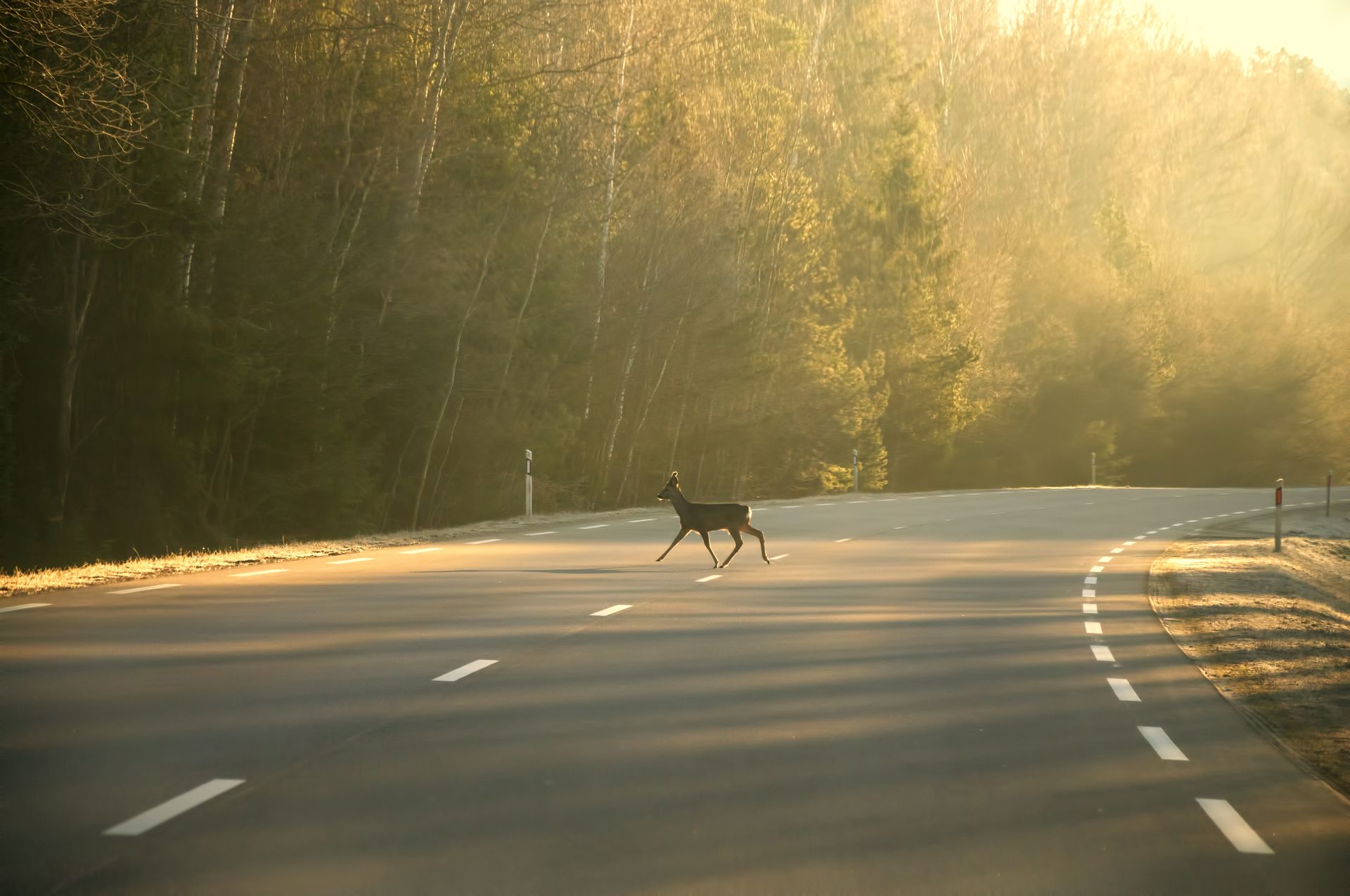
A deer crossing a forest highway at dawn. Photo by Aurelijus U. via Pexels.
Insurance claims for animal strikes climb through October and peak in November, when deer are breeding and moving. The crashes that kill people follow a different pattern, and many of the deaths come from what happens after the animal is hit. The standard advice is to brake hard and stay in your lane.
What the claims data shows
The Highway Loss Data Institute looked at claims from 2013 to 2022 and found the November rate of animal-strike claims was more than twice the yearly average. August had the fewest. November claims were also costlier, averaging $4,600 against $3,522 in February, the month with the least severe crashes.
The insurance data does not record what animal was hit. The institute points out that the timing and the heavier damage both suggest most of these collisions involve deer.
Why fall, and why at dawn and dusk
The November peak matches the deer mating season, when deer are most active. The New York State Department of Transportation warns drivers that October through December is the riskiest period, and that most deer-vehicle collisions there happen in the two hours around sunrise and sunset. New York alone estimates 60,000 to 70,000 such collisions a year.
Fatal crashes follow a different calendar
Deaths do not track claims. IIHS counts 210 deaths in 2024 in crashes where the first harmful event was hitting an animal, and more of them happened in July through September than in any other quarter. Federal crash data does not record the species. An earlier review of fatal animal crashes in nine states found 77 percent of the animals struck were deer.
In 63 percent of the 2024 deaths, the collision with the animal was the most harmful event. In the rest it was something that followed, such as a rollover (12 percent), a fixed object (8 percent) or another vehicle (8 percent).
What happens after the hit
That earlier review, a study of 147 fatal crashes from 2000 to 2002, found 80 percent were single-vehicle crashes. Typically a motorcyclist hit an animal and came off the bike, or a car or truck hit an animal and ran off the road. The authors noted that most deaths came from the collisions that followed, not from contact with the animal.
Protection mattered. Sixty percent of the vehicle occupants killed were not wearing seat belts, and 65 percent of the motorcyclists killed were not wearing helmets.
Brake, do not swerve
New York’s guidance is direct: if a deer runs in front of you, brake firmly but do not swerve. Swerving can put the vehicle into oncoming traffic, a pedestrian, a tree or a utility pole, all of which can be worse than the deer.
Where the warning signs are
The same guidance points to things drivers control:
- Slow down at dawn and dusk, and use high beams at night when possible.
- Slow down for deer standing by the road. They can bolt.
- Expect more than one. Deer often travel in pairs or groups.
- Take the leaping-deer signs seriously. They mark known crossing areas.
Gadgets and new technology
New York advises against relying on deer whistles, extra lights or reflectors, and says research points to driver behavior as the best defense.
Automatic emergency braking may help. IIHS notes that some newer systems, especially those built to detect pedestrians, may prevent some animal strikes. But in 2022 vehicles with front automatic emergency braking of any kind made up only about 23 percent of the fleet, too few to have a noticeable effect on claims.
Sources
- IIHS, Dip in deer strikes poses a mystery for insurers ahead of peak season
- IIHS, Fatality Facts: Collisions with fixed objects and animals
- IIHS, Characteristics of vehicle-animal crashes in which vehicle occupants are killed (Williams and Wells)
- New York State Department of Transportation, Deer and Moose Avoidance
This article was researched and drafted with the assistance of AI tools and reviewed, fact-checked and edited by Leonidas Clark before publication. General information, not advice for a specific vehicle.