ATF wants to stop asking firearms applicants for passport photographs and cut the number of fingerprint cards they file. The proposal has been open since July and comments close on October 5.
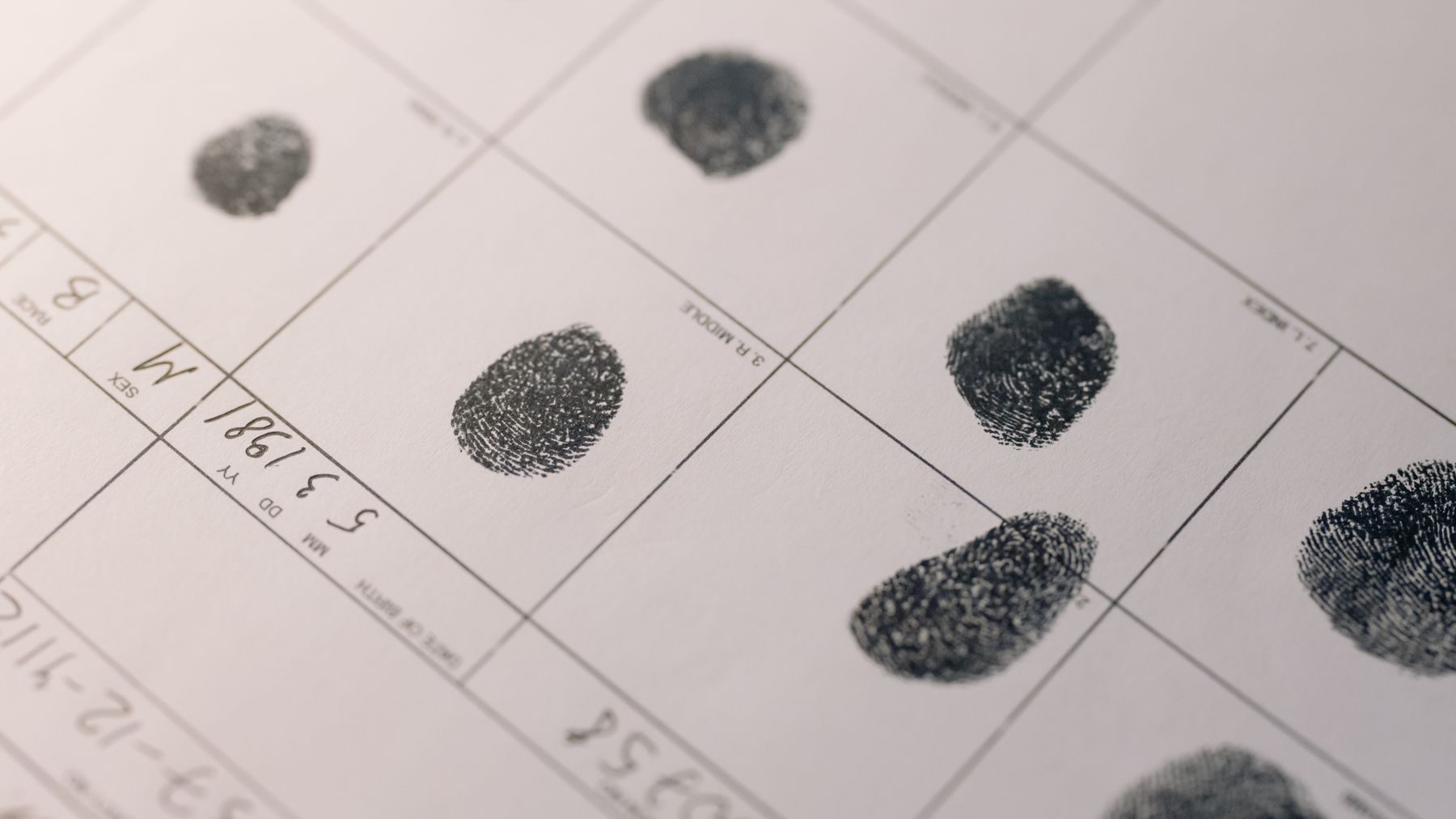
A completed fingerprint card. Photo via Pexels.
The proposed rule, RIN 1140-AA63, was published in the Federal Register on July 6. It has drawn 373 comments so far — a small number for a rule that touches every suppressor, short-barreled rifle and dealer license application in the country.
What applicants send today
Two separate statutes create the requirement, and they do not line up.
Under the Gun Control Act, 18 U.S.C. § 923(a) requires a federal firearms license applicant to submit a photograph and fingerprints. ATF implements that at 27 CFR 478.44(a), and Form 7 asks for one fingerprint card.
Under the National Firearms Act, 26 U.S.C. §§ 5812 and 5822 require individual makers and transferees to submit fingerprints and photographs. The regulations implementing that — 27 CFR 479.63(a), 479.85(a) and 479.90(b) — ask for two fingerprint cards on Forms 1, 4 and 5.
Both regimes also require a two-inch-square passport-style photograph. And notably, the NFA statute imposes no fingerprint or photograph requirement at all on trusts or other legal entities, which is why the paperwork for entity applicants has always sat on a slightly odd footing.
What ATF is proposing
Three changes, all in the direction of less paper.
A copy of a photo ID would replace the passport-style photograph for every applicant — individuals and responsible persons alike, across Forms 1, 4, 5, 7, 23 and 5630.7.
Individuals and Gun Control Act responsible persons would file one fingerprint card instead of two, and ATF would clarify that a single digital set satisfies the requirement for anyone applying electronically.
Responsible persons under the NFA would stop submitting fingerprints with Form 23 entirely, providing them only if ATF asks in order to complete a background check.
The reasoning is worth reading
ATF makes an argument that is more interesting than the paperwork suggests: the fingerprints were never what the background check runs on.
A NICS query needs five descriptors under FBI regulations at 28 CFR 25.7 — name, sex, race, complete date of birth, and residence state. None of them is a fingerprint. ATF says fingerprints are used primarily downstream, to resolve criminal-history or identity questions when an applicant’s biographic details match someone else’s, and by the FBI in NICS appeals.
That reframes the requirement. A second card is not a second check; it is a spare copy of something used only when a problem surfaces.
The savings are smaller than they sound
ATF’s own numbers are modest, and the agency does not pretend otherwise.
About 98 percent of NFA individual applicants already file electronically and submit one digital set, so they would see no change in fingerprint cost. For the two percent who still file on paper, two sets cost about $50 and one costs about $32 — a saving of $18 per application. Digital fingerprints run about $73 on average. The same 98-to-2 split holds for NFA responsible persons.
The Office of Management and Budget classed the rule as a significant regulatory action under Executive Order 12866, while finding it would not reach $100 million of impact in any year.
Where this actually bites is friction rather than dollars: a trust with several responsible persons currently has to route every one of them through a fingerprinting appointment before anything gets filed. Removing that from the front of the process is a real change to how long a transfer takes to assemble, even if the line-item saving is small.
Why this matters if you own a suppressor
Every suppressor purchase runs on a Form 4, and every suppressor built at home runs on a Form 1. Anyone who has been through either will recognize the photograph and fingerprint step as the part that turns a purchase into a project.
None of this touches the $200 transfer tax, the registration requirement, or the wait. It changes what goes in the envelope. The two legal layers that actually govern hunting with a suppressor — federal possession and state hunting rules — are unaffected, and we covered how those interact in our piece on suppressors and the two rule sets.
How to comment
Comments close October 5, 2026, and go through regulations.gov under RIN 1140-AA63, or by mail to ATF’s Office of Regulatory Affairs.
With 373 comments filed, this is a rule where an individual submission still carries weight. What the agency has to answer on the record is a substantive point — a practical consequence it has not addressed, an error in its cost assumptions, or a case where the proposal would not work as described. Support or opposition on its own creates nothing to respond to.
This article was researched and drafted with the assistance of AI tools and reviewed, fact-checked and edited by Leonidas Clark before publication. This is a proposed rule and not current law; confirm requirements with ATF before filing.