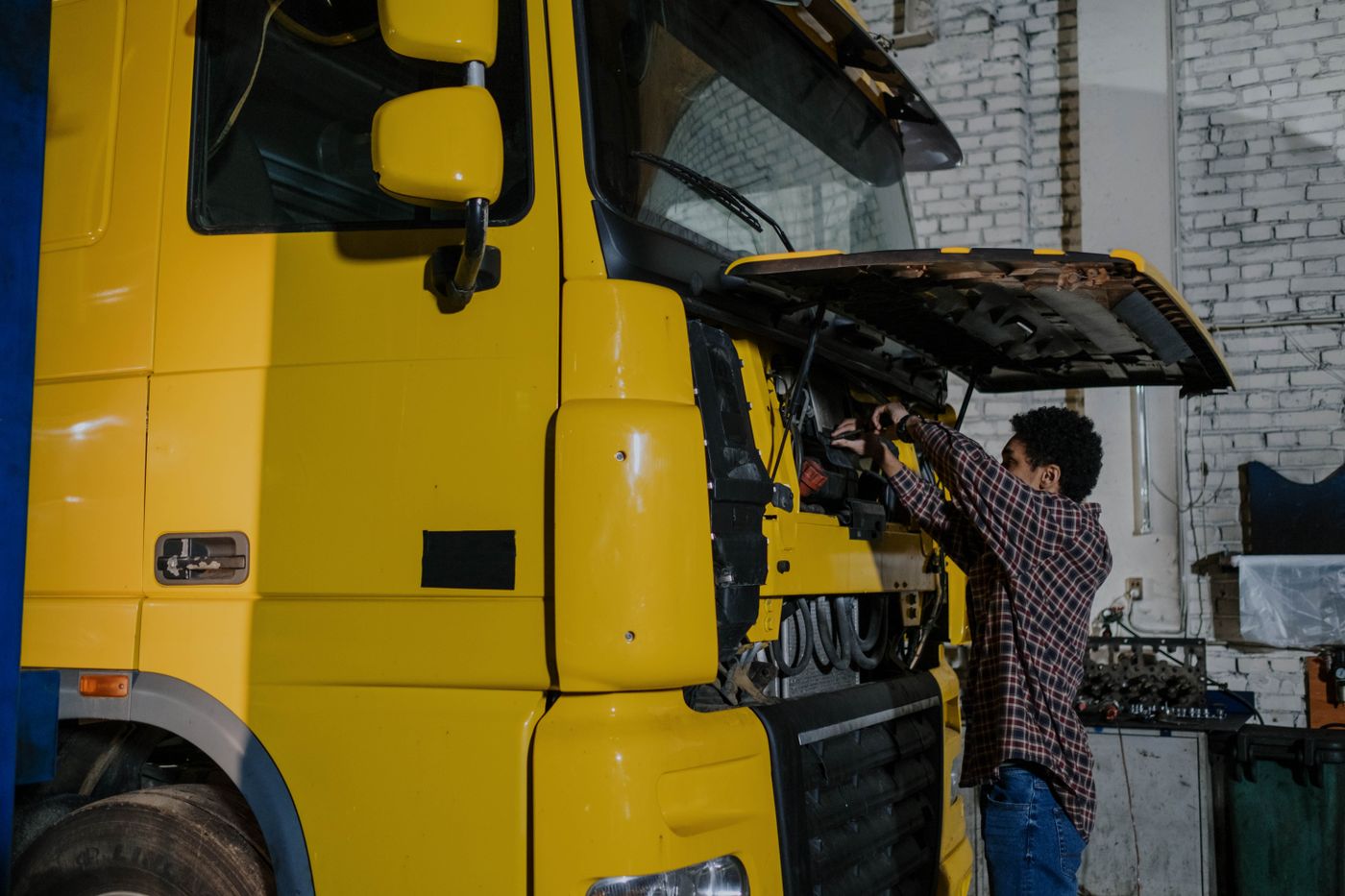
A mechanic working on a truck with the cab open. Photo via Pexels.
Emissions equipment on modern diesel trucks is unpopular, complicated and expensive to repair. Removing it is also unlawful, and the legal position is clearer than online discussion suggests.
What the equipment does
Exhaust gas recirculation routes some exhaust back into the intake to lower combustion temperature and reduce nitrogen oxide formation.
Diesel particulate filter traps soot and burns it off periodically in a regeneration cycle. Short-trip use prevents complete regeneration and is a common source of trouble.
Selective catalytic reduction injects diesel exhaust fluid to convert nitrogen oxides into nitrogen and water.
The legal position
The Clean Air Act prohibits tampering with a vehicle’s emissions control system, and separately prohibits manufacturing, selling, offering for sale and installing aftermarket devices that defeat those controls. Penalties are substantial: EPA cites fines of over $5,000 per defeat device, and over $5,000 per tampered vehicle for a dealer.
Enforcement has concentrated on tuner and shop operations — stopping aftermarket defeat devices is one of EPA’s National Enforcement and Compliance Initiatives, and the agency reports 172 civil cases from FY2020 to FY2023 totalling $55.5 million in penalties, alongside 17 criminal cases. But the prohibition is not limited to commercial actors.
State consequences stack on top — inspection failure where emissions testing exists, and registration difficulty in some jurisdictions.
The costs people underestimate
A deleted truck is difficult to sell legally and difficult to insure honestly, and dealers generally will not take one in trade in the ordinary way.
Warranty coverage on related components is typically void.
Reversing a delete — to sell, to move state, or to pass inspection — means buying and fitting the parts that were removed, frequently more expensive than the repair originally avoided.
The legitimate alternatives
Regeneration problems often trace to duty cycle rather than defect. A truck used for short trips may simply need a periodic longer run at temperature.
Sensor and injector faults are frequently the actual cause of repeated warnings, and are repairable within the law.
Genuine defects sometimes become recalls or extended warranty campaigns, which is worth checking by VIN before paying for anything.
Why enforcement reaches individuals
The prohibition covers manufacturing, selling, offering for sale and installing defeat devices, and separately covers tampering with a vehicle’s own emissions controls. The first set of verbs is what makes tuners and shops the primary enforcement targets; the second is what makes an owner liable.
EPA has made this one of its National Enforcement and Compliance Initiatives, which in practice means dedicated resources and a published case pipeline rather than occasional action.
The resale problem
A deleted truck is difficult to sell honestly, difficult to insure honestly and generally unacceptable in trade. Reversing a delete means buying back the DPF, EGR and SCR hardware that was removed, frequently at a cost exceeding the repair originally avoided, and often with software work on top.
Where the original complaint was regeneration trouble, the cause is frequently duty cycle rather than defect: a truck used for short cold trips never completes a regeneration. Sensor and injector faults account for many of the rest, and both are repairable within the law.
Sources
- EPA, National Enforcement and Compliance Initiative: Stopping Aftermarket Defeat Devices
- EPA, Fact Sheet: Vehicle Aftermarket Defeat Devices and Tampering (PDF)
- EPA, Aftermarket Defeat Devices and Tampering are Illegal — enforcement alert (PDF)
- EPA, Enforcement Actions Against Defeat Device and Tampering Violations
- NHTSA, Recalls lookup by VIN
This article was researched and drafted with the assistance of AI tools and reviewed, fact-checked and edited by Leonidas Clark before publication. General information, not legal or mechanical advice for a specific vehicle.