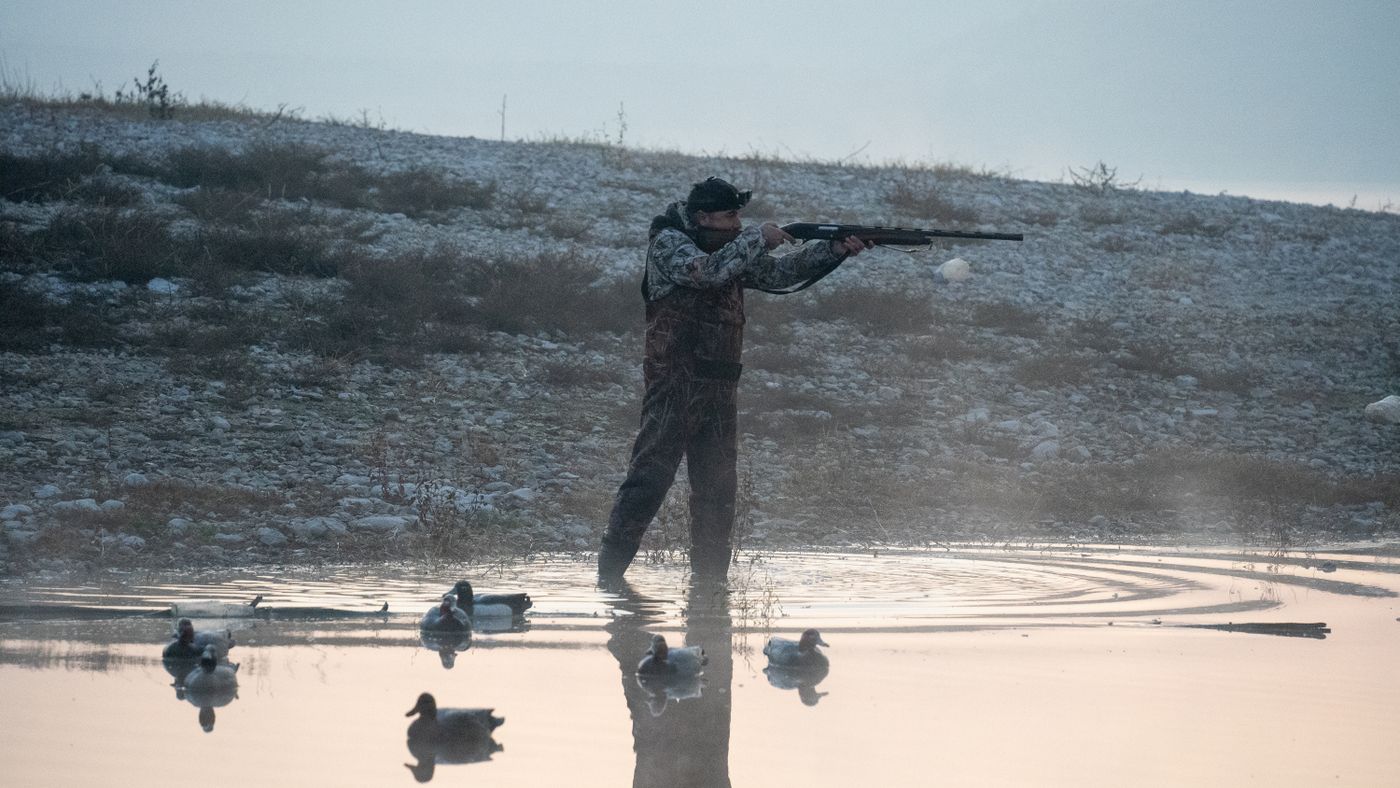
A hunter shouldering a shotgun over a decoy spread. Photo via Pexels.
Hunter education is one of the few near-universal requirements in American hunting, and one where the details differ enough to strand an out-of-state hunter at a license counter.
The general shape
Most states require completion of a hunter education course before a first license, usually tied to a birth-date cutoff — people born before a certain date are exempt, because the requirement was introduced at a point in time. The date is state-specific: Texas applies its requirement to everyone born on or after 2 September 1971, including out-of-state hunters. Texas maintains a table of requirements for every state and territory, which is the fastest way to check a destination.
Courses cover firearm handling, safe zones of fire, wildlife identification, regulations and ethics. Delivery is commonly a mix of online coursework plus an in-person field day, though fully online options exist in some states for some age groups.
Reciprocity, mostly
Most states accept hunter education certificates issued by other states, which is what makes out-of-state hunting practical at all. Texas accepts any other state or provincial certification provided the hunter is carrying a valid Texas license; Michigan likewise sells a non-resident license on another state’s certificate.
The practical catches are documentation rather than principle. You generally need the physical or digital certificate, and a license agent may not be able to look up a certificate issued elsewhere. Replacing a lost certificate from another state takes time you do not have on the morning of a hunt.
Some states also have additional requirements layered on top — bowhunter education for certain archery seasons, or specific certification for certain species — which are not covered by a general hunter education card.
Apprentice and mentored options
Many states offer an apprentice, mentored or deferral option that allows a beginner to hunt before completing certification, provided they are accompanied by a licensed adult meeting defined criteria. Texas runs a one-year hunter education deferral for those 17 and over, on condition they hunt accompanied by someone at least 17 who is licensed and has passed the course.
These are usually limited — a set number of years, or a single season — and the supervision requirements are specific. “Accompanied” often has a legal definition involving distance and line of sight, not merely being in the same woods.
Before traveling
Carry the certificate. Confirm the destination state accepts it. Check whether the species or season you are hunting carries an additional certification requirement.
And check the age rules for anyone hunting with you — youth requirements, supervision ratios and minimum ages vary more than the adult rules do.
Replacing a certificate you cannot find
The most common version of this problem is not reciprocity at all — it is a card issued decades ago and long since lost.
Most state agencies maintain a searchable record and will reissue a duplicate, often online and often free or close to it. The search generally works from name, date of birth and approximate year of certification, so an approximate year is usually enough to find it.
Where the course predates the agency’s digital records, the fallback is a certified statement from the issuing agency or, in some states, an affidavit. Both take time, which is the argument for confirming you can produce the certificate well before the trip rather than at the counter.
A photograph of the card on a phone is accepted in a growing number of states and refused in others. Carrying the physical card removes the question.
The requirements that sit on top
A general hunter education certificate is the baseline, and several categories of hunting require something further that reciprocity does not automatically cover.
Bowhunter education is the most common, required for certain archery seasons in a number of states and issued separately from the general course. Waterfowl hunters need a federal duck stamp and, in most states, Harvest Information Program registration — which is annual, state-specific and free, and is the one most often forgotten. Some states add species-specific orientation for bear, turkey or furbearers.
None of these are difficult. All of them are the kind of requirement that is trivial to satisfy in advance and impossible to satisfy at six in the morning on opening day.
Sources
- Texas Parks & Wildlife, Hunter Education Requirements in the United States and Canada
- Texas Parks & Wildlife, Hunter Education Requirements by State/Territory
- Texas Parks & Wildlife, Hunter Education FAQ — deferral and accompaniment rules
- Michigan DNR, Bowhunter education certificate
This article was researched and drafted with the assistance of AI tools and reviewed, fact-checked and edited by Leonidas Clark before publication. It is general information, not legal advice. Confirm current rules with the relevant agency before you travel or hunt.