
If you fish ocean salmon off central California and you read the federal rule when it came out in May, you read an incomplete version of it.
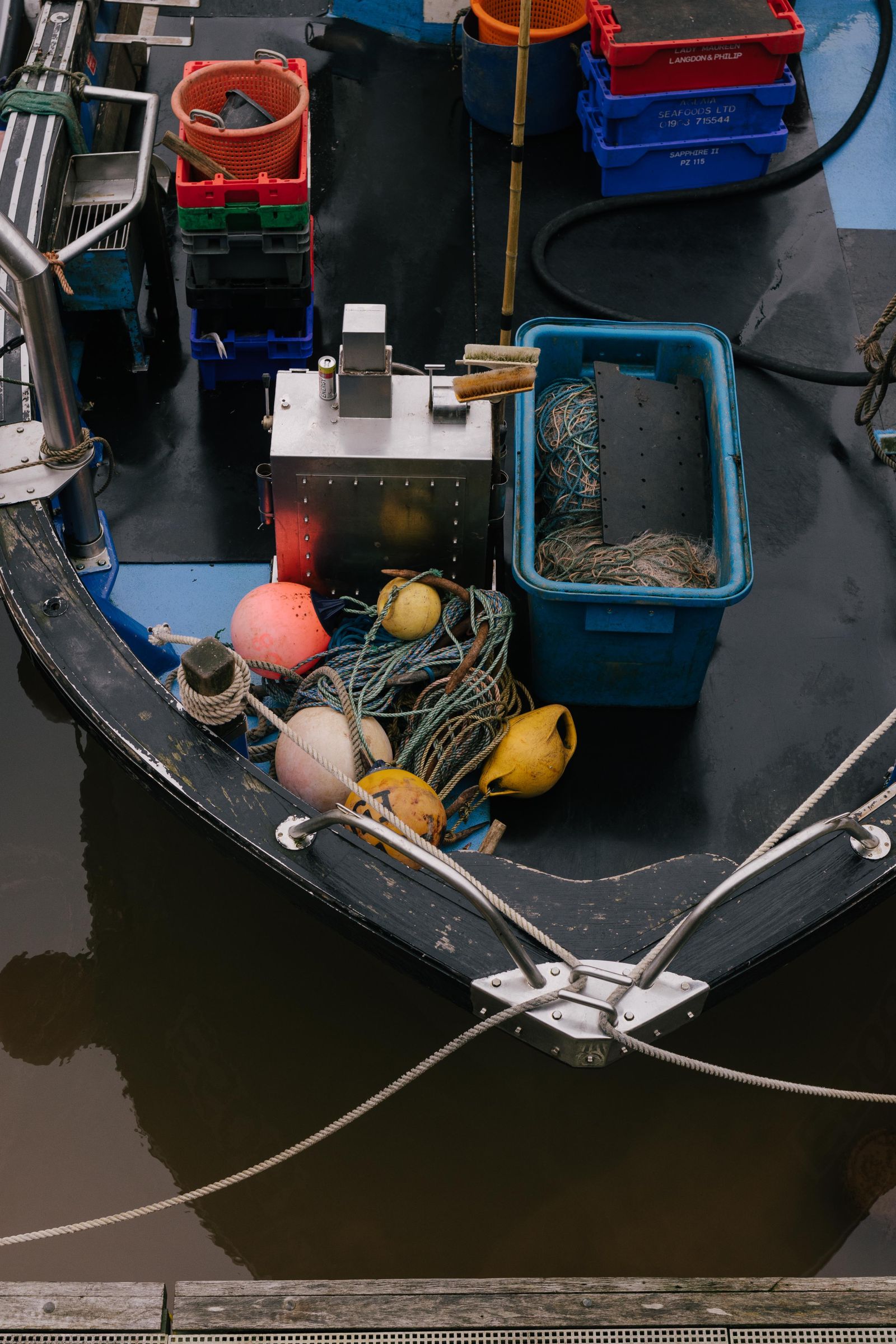
A small fishing boat with gear and floats, tied up at a dock. Photo via Pexels.
NOAA Fisheries has issued a correcting amendment to the 2026 West Coast salmon management measures, restoring text that was accidentally omitted from the rule published on May 19. The correction took effect September 2, 2026.
What was wrong
The May rule set management measures for ocean salmon fisheries off Washington, Oregon and California for the season that began May 16, 2026, running until the 2027 measures take effect — expected on May 16, 2027. The measures are issued under the Magnuson-Stevens Fishery Conservation and Management Act.
The error was in the recreational measures for the subarea running from Pigeon Point to the U.S./Mexico border, known as the Monterey subarea. Text that should have appeared in the published rule was left out.
The correction adds that omitted text back, and separately clarifies how bag limits and early 2027 management measures apply in the area from Point Arena to Pigeon Point — the San Francisco subarea.
Why this is worth knowing
Anglers who did the responsible thing — went to the source, read the federal rule when it published — got an incomplete document. Anyone relying on a printout, a screenshot, or a summary written in May is working from that same incomplete version.
Fishery regulations are also unusually prone to going stale mid-season. Ocean salmon measures are subject to inseason actions that can adjust openings, closures and limits while the season is running, so the rule in force in September is not necessarily the rule published in May even before a correction is involved.
The practical habit: check the current rule rather than the one you saved.
Where the boundaries actually sit
Ocean salmon management divides the coast into subareas with their own measures, and the boundaries are geographic points rather than county or state lines.
Two of them are directly involved here — Point Arena to Pigeon Point, and Pigeon Point south to the Mexican border. An angler working water near a boundary is subject to whichever subarea they are fishing in, which is a distinction worth being certain about rather than approximately right on.
Where to check
The correcting amendment is published as Fisheries Off West Coast States; West Coast Salmon Fisheries; 2026 Specifications and Management Measures; Correction, and it identifies precisely what was added.
For current in-season status, NOAA Fisheries West Coast Region publishes updates as they are issued, and California, Oregon and Washington state agencies carry the recreational summaries anglers usually work from. Where the two differ, the federal rule is the one with legal force.
How to tell whether the rule you are reading is current
This correction is a useful reminder that a federal rule is a living document, and the version you downloaded is a snapshot. There are a few habits that catch this.
Read rules on the Federal Register site rather than from a saved PDF. A document page there carries a notice when a later document amends or corrects it, which is precisely the signal a printout cannot give you. The same applies to the eCFR, which reflects the regulations as currently in force rather than as originally published.
Check the date the version you are holding was generated, not the date of the season it governs. A May document describing a season that runs to the following May has eleven months in which something can change underneath it.
And treat state agency summaries as navigation rather than authority. They are written for anglers and they are usually clearer than the federal text, but where the two diverge the federal rule is the one that carries legal force.
Why in-season change is normal here
Ocean salmon management is built around in-season adjustment in a way most fisheries are not. Quotas are monitored as the season runs, and openings, closures and limits can be moved when catch tracks ahead of or behind projections. A rule published at the start of a season is the framework, not the final word.
For an angler that means the check before a trip is not optional diligence, it is the only way the system can work as designed.
This article was researched and drafted with the assistance of AI tools and reviewed, fact-checked and edited by Leonidas Clark before publication. Ocean salmon measures change in season; confirm current rules with NOAA Fisheries or your state agency before you fish.