
Explainer
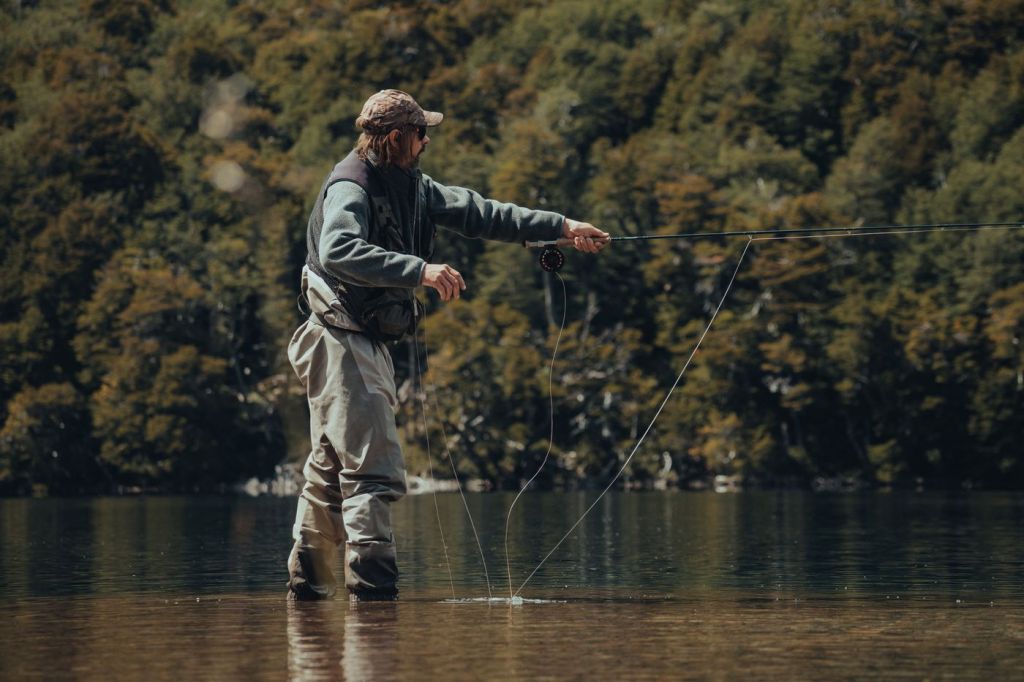
An angler casting a fly line on a river. Photo via Pexels.
Buying a fishing license feels like a single transaction and often is not. Several separate authorisations commonly stack on top of it.
The base license
A resident or non-resident freshwater license, typically annual and calendar-bound or rolling from purchase depending on the state.
Age exemptions are common at both ends, and several states offer free or reduced licenses for veterans, disabled anglers and seniors.
What sits on top
Species stamps or endorsements. Trout is the most common. Pennsylvania requires a Trout Permit to fish for trout, and a separate Lake Erie Permit for Lake Erie, Presque Isle Bay and their tributaries. Missouri requires a Trout Permit for winter fishing in trout parks and year-round on part of Lake Taneycomo. Texas works differently again, requiring a freshwater or saltwater endorsement on top of the license itself.
Water-specific permits. Some reservoirs, tailwaters and special-regulation areas require their own permit, sometimes issued by a different authority than the state agency.
Saltwater registration. Marine fishing often requires separate registration, and in some states that satisfies a federal registry requirement.
Two-pole or additional-line permits exist in states where one rod is the default.
Reciprocity on border waters
Rivers and lakes forming a state boundary frequently have reciprocal agreements allowing a license from either state — but the agreements are specific and negotiated water by water. Missouri states that privileges on boundary waters are mutually agreed between the two states and that knowing which state you are in is the angler’s responsibility. Its White River Border Lakes Permit covers Bull Shoals, Norfork and Table Rock — and explicitly excludes trout. Texas publishes its own border water requirements separately.
This is one of the most commonly misunderstood areas in fishing regulation, and assuming reciprocity because a water is shared is a reliable way to be wrong.
Carrying it
Most states require the license on your person while fishing. Digital licenses are widely accepted, with the caveat that a phone with no signal and no battery is not a license.
Downloading rather than relying on an app that needs to load is the practical fix.
Free days and exemptions
Most states run at least one free fishing day a year on which no license is required, and many exempt anglers below and above set ages, resident veterans with a service-connected disability, and people fishing in a licensed private pond. The exemptions rarely waive the species stamps, which is the usual trap — free to fish, still needing a trout permit.
Charter and pier arrangements work the same way. Where a pier holds a blanket license it typically covers the base requirement only.
When the license year actually ends
Some states sell a calendar-year license that expires on 31 December regardless of purchase date; others sell a rolling twelve months from purchase; a few run to the end of a defined license year in spring. Buying in November can therefore mean six weeks of validity or twelve months of it.
Digital licenses are widely accepted, but an app that needs a signal to load is not a license in a canyon. Downloading a copy in advance is the practical version of carrying it.
Border water in practice
The point Missouri makes explicitly is worth repeating: on boundary waters, knowing which state you are actually in is the angler’s responsibility, and reciprocity is negotiated water by water rather than granted generally. Texas publishes its border-water requirements separately from its general license rules for the same reason.
Sources
- Texas Parks & Wildlife, Fishing Endorsements, Tags & Permits
- Texas Parks & Wildlife, Requirements for Federal, State & Border Waters
- Missouri Department of Conservation, Trout Permits
- Missouri Department of Conservation, Reciprocal Fishing Privileges
- Pennsylvania Fish and Boat Commission, Buy a Fishing License/Permit
This article was researched and drafted with the assistance of AI tools and reviewed, fact-checked and edited by Leonidas Clark before publication. Rules vary by water and state; confirm before you fish.
 The 4x4 Life